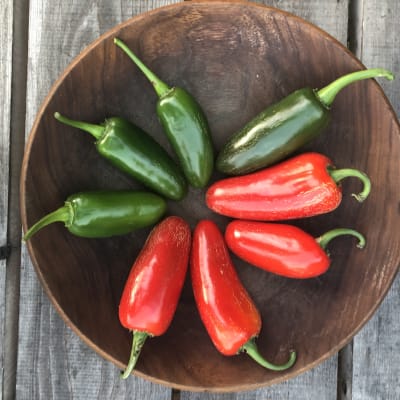
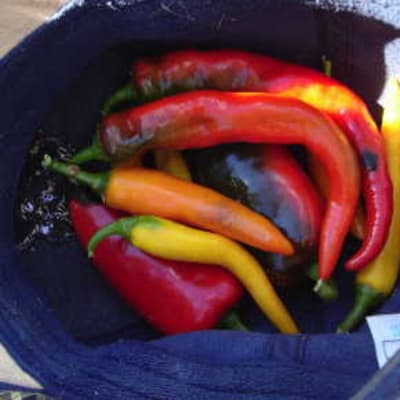
Capsicum annuum Red skin. (78 days) Open pollinated. Dark green to red 7" long tapered. Pungent, moderately hot; 900-2,500 Scovilles. Typical pepper for chiles rellenos.
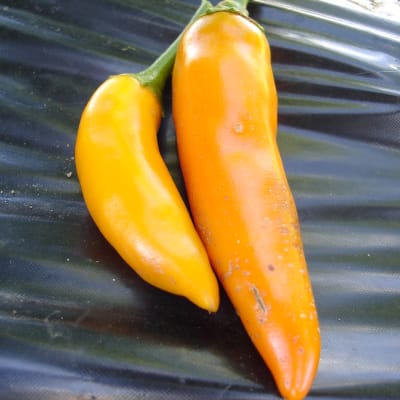
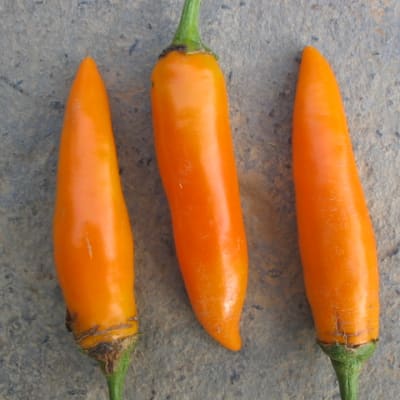
Capsicum annuum Fluorescent orange skin. (68 days) Open pollinated. Thin-walled 1½–3½" tapered fruits are as hot as they look and make welcome additions to chutneys, marinades, salsas, and hot sauces. Also delicious dried and ground.
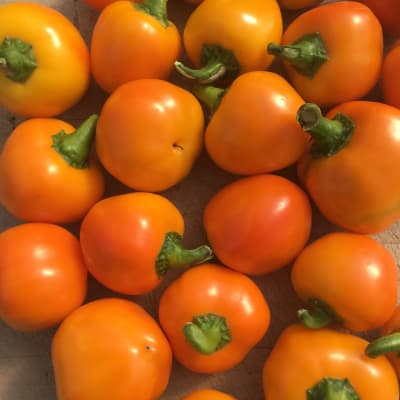
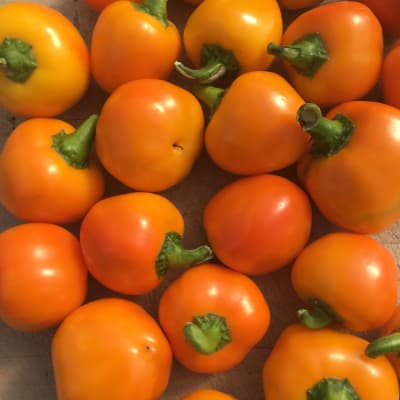
Capsicum annuum Tangerine skin. (74 days) Open pollinated. Round 1-2" shiny bright tangerine fruits on sturdy plants. Heat is comparable to a mild jalapeño, but varies with the weather
Capsicum annuum Tangerine skin. (74 days) Open pollinated. Round 1-2" shiny bright tangerine fruits on sturdy plants. Heat is comparable to a mild jalapeño, but varies with the weather.
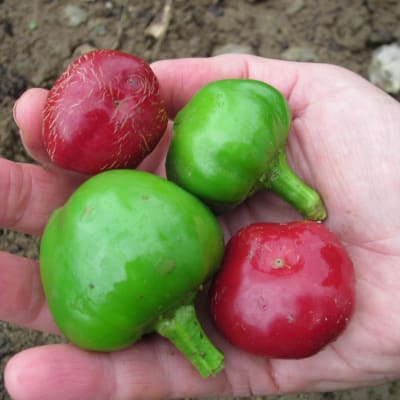
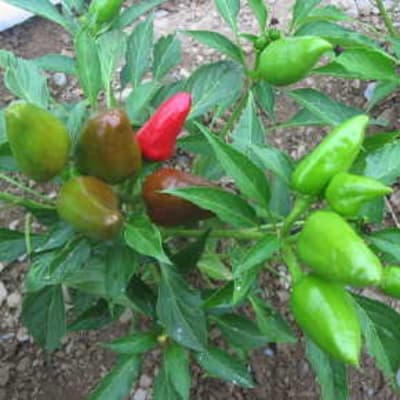
Capsicum annuum Deep red skin. (65 days) Open pollinated. Black 2.5" long conical peppers ripen to lustrous garnet. Mild, juicy, thick-walled, a little less spicy than a jalapeño; 2,000-5,000 Scovilles.
Capsicum annuum Red skin. (65 days green, 85 days ripe) Open pollinated. Dark green 1x3" sausage-shaped blunt fruits. Brown netting appears as fruits ripen to dark red. Hot! 4,000 to 6,500 Scovilles. Early.
Capsicum annuum Red skin. (75 days) F-1 hybrid. Shiny green ripens to blazing red in a small strawberry-shaped cherry-type. Sweet and spicy, 2,500-5,000 Scovilles.
Capsicum annuum Red skin. (80 days) Open pollinated. Striking color display, white with green stripes to orange with brown stripes, to red. 2" curving pendant form. 5,000-30,000 Scovilles. Attractive foliage.
Capsicum annuum Orange skin. (100 days) Open pollinated. Shiny orange fruits are a bit longer than a habanero but they pull off the look. Bushy short plants bear about 2 dozen sweet—not hot— fruits.
Capsicum annuum Red skin. (75 days) Open pollinated. The 2½–3 x ½" bright scarlet fruits have thin walls and classic serrano heat. Perfect for fresh salsa, pickling and hot sauces
Capsicum annuum Red skin. (88 days) Open pollinated. This rare Pennsylvania Dutch heirloom packs considerable heat. Rarely eaten raw, the peppers were traditionally used for pickling and pepper vinegar.
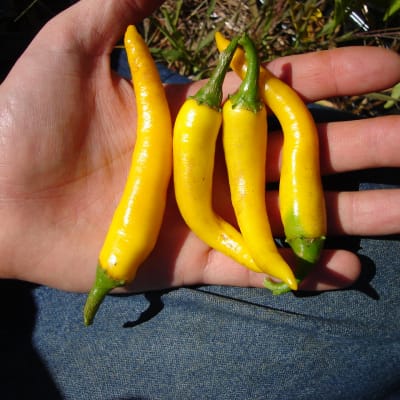
Capsicum annuum Red skin. (68 days) Open pollinated. Smooth waxy yellow 1.5x5.5" tapered fruits ripen to orange then red. Semi-hot, 5,000-10,000 Scovilles. Early and prolific.
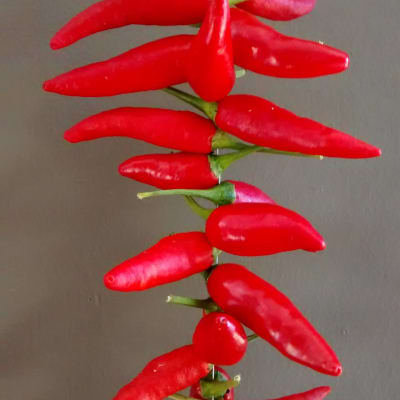
Capsicum annuum Red skin. (75 days) Open pollinated. Bright red, 5-6" long by 1/2" wide tapered and often curled. Hot, pungent; 3,500-5,000 Scovilles. Dries easily. Prolific.
Capsicum chinense Tangerine skin. (90 days) Open pollinated. A Scotch Bonnet–type infamous for its extreme heat, their distinctive flavor makes them a key ingredient in West Indian jerk sauces.
Capsicum annuum Red skin. (82 days) Open pollinated. Tiny bright red 1" conical fruits stand erect from foliage. Very hot, 25,000-40,000 Scovilles. Pretty and prolific.
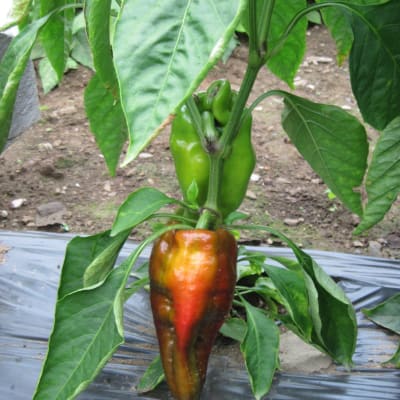
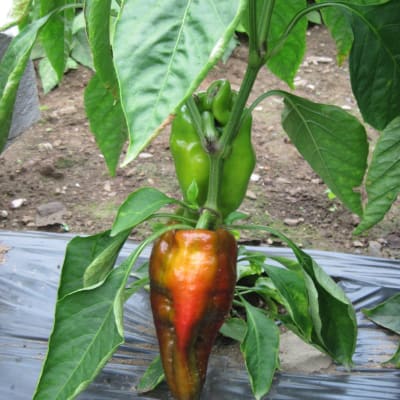
Capsicum annuum Red skin. (64 days green, 80 days red ripe) F-1 hybrid. Uniform glossy dark red fruits are mostly 2-lobed, flattened and tapering with a recessed stem. Known as Poblano when green.
 Beaver Dam Hot Pepper - OrganicSeedsunavailable, crop failure