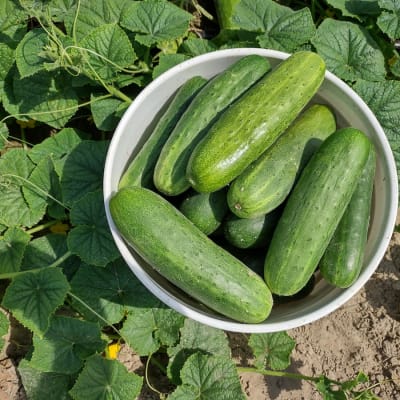
Cucumis sativus (54 days) Open pollinated. Smooth thin-skinned fruits are juicy, refreshingly cool, enjoyably mild and almost completely free of the bitterness common in American slicers.
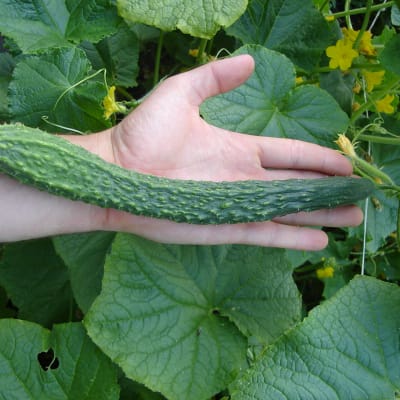
Cucumis sativus (62 days) Open pollinated. Extra-long Asian slicer. Uniform slender smooth-skinned 9-12" fruit with crisp non-bitter flesh. Excellent flavor.
Cucumis sativus (60 days) Open pollinated. Parthenocarpic pickler. Blocky, smaller than average fruit. Compact growth and small leaves. Can be grown under row cover.
Cucumis sativus (58 days) Open pollinated. Slicer from the same line as Marketmore 76. Fruit is slimmer and darker, with improved yield and disease resistance.
Solanum melongena (88 days) Open pollinated. Italian heirloom. White with lavender streaking, plump, 3-4" wide by 5" long. Fruits avg 2 lb. Creamy, delicate, great for gourmet markets.
Solanum melongena (84 days) Open pollinated. Pink-lavender with white shoulders, pear-shaped, 4-6" wide by 6-8" long. Sweet tender white flesh. Early and productive.
Foeniculum vulgare (65 days) Open pollinated. Slow grower with very thin stems valued for its striking feathery bronze foliage. Delicious and decorative.
Foeniculum vulgare (72 days) Open pollinated. Nearly as bolt proof as those pricey hybrids seven times the cost and 5-7 days longer-standing than Zefa Fino, with much thicker bulbs.
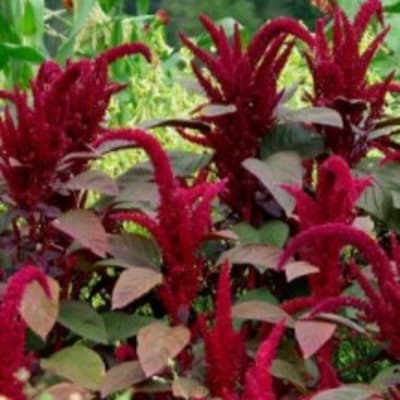
Amaranthus hybridus (65 days to flower, 125 days to seed) Open pollinated. Is it a green vegetable? An ornamental? A gluten-free grain? Why, yes! No wonder Amaranth was sacred in pre-Columbian Mexico.
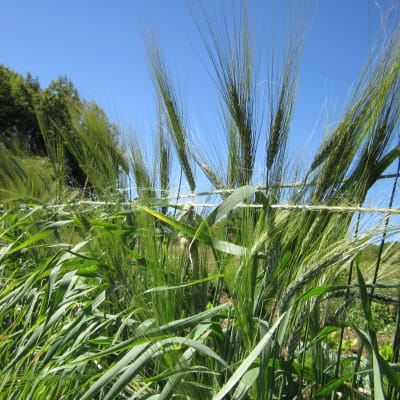
Hordeum vulgare Open pollinated. An historic 6-rowed barley selected by Luther Burbank from California hulless barley. In his final seed catalog he called it “one of [his] greatest grain creations.”
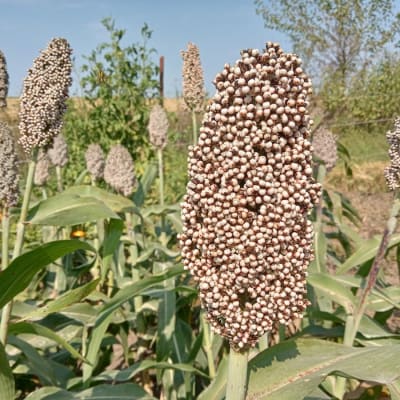
Sorghum bicolor (105 days) Open pollinated. Sprays of ornamental seedheads in gold, bronze, brown, black, burgundy, red and cream are great for making natural straw brooms and classic autumnal displays. Small shiny seeds are beloved by birds.
Pennisetum glaucum (120 days) Open pollinated. Ornamental grass with deep-purple foliage and large purple seed spikes. Popular in arrangements. 4-5' tall.
Avena nuda (100 days) Open pollinated. Grain that’s easier to thresh than most other oats, though it still has a small hull that must be removed. A good variety to re-introduce growing grain on home ground.
Oryza sativa (115 days) Open pollinated. Upland short-grain hardy Russian variety adapted to dry-land production. Can withstand a light frost. May be direct seeded in warmer regions.
Oryza sativa (115 days) Open pollinated. Upland variety from Japan. This great-tasting short-grained brown rice is much easier to hull and process with human-powered equipment than other varieties. Does not require flooding.
Oryza sativa (120 days) Open pollinated. Short grain light brown rice, can work in Zone 5b in paddies from direct sowing but does best from transplants.
Oryza sativa (120 days) Open pollinated. Lowland variety from northern Japan. Pearly white short-grain sweet-sticky rice is great for mochi and fries well.
Sorghum bicolor (100 days) Open pollinated. A white-seeded 4' grain sorghum, can be popped, but it is more commonly ground into a mild-flavored flour, cooked as a grain, or sometimes nixtamalized like corn and made into tortillas.
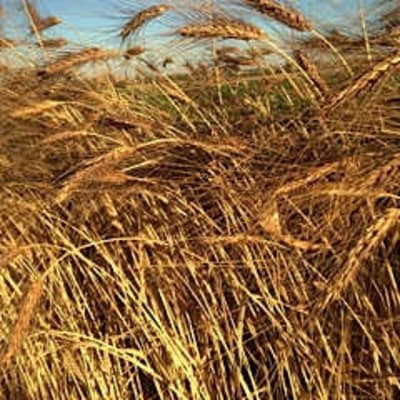
Triticum aestivum Open pollinated. Extremely cold hardy hard red wheat good for small spaces and well adapted to New England. Flour has great flavor and texture, and sturdy plants make great straw.
Triticum durum Open pollinated. Too beautiful to eat! Used for wheat weaving and flower arrangements. Four rows with blue-grey husks and long black awns. Sow in April, reap in Sept.
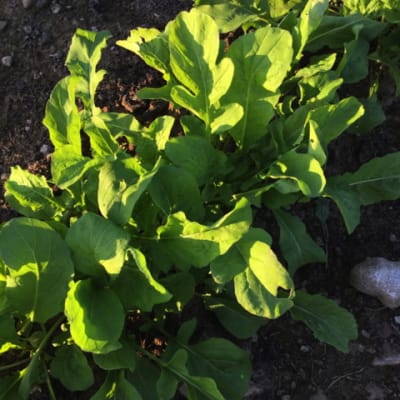
Eruca sativa (47 days) Open pollinated. Musky, cold tolerant greens, great for early spring, late fall, over-wintering. Eat the flowers if you miss some of the greens.
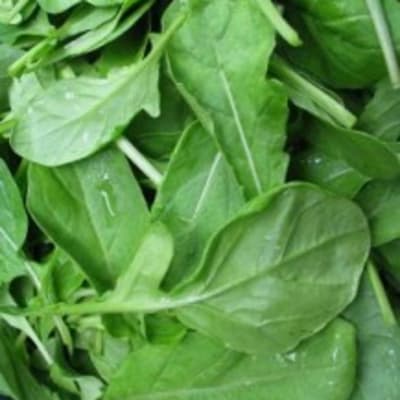
Eruca sativa (21 days baby, 35 days mature) Open pollinated. Profuse basal growth. Dense clusters of tasty lush leaves. Grows well in hot and cool seasons.
Eruca sativa (44 days) Open pollinated. Cross of two European heirlooms and selected for vigor and cold hardiness. Turns purple when it freezes. Full of flavor.
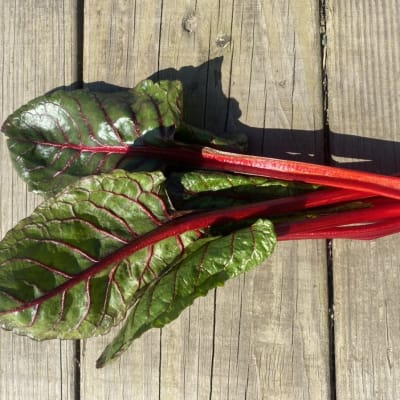
Beta vulgaris (55 days for bunching, 35-40 days baby leaf) Open pollinated. Very dark lush green fully savoyed leaf, brilliant red contrasting stalk. Excellent regrowth for multiple harvests.
Hablitzia tamnoides (45 days) Open pollinated. Perennial spinach-like green. Hardy vine from the Caucasus grows 6-9' long for 2-3 months beginning very early spring. Heart-shaped attractive leaves.
Bunias orientalis Open pollinated. Perennial, Zones 4-8. Tender spicy mustard greens and florets for stir-frying. Drought-tolerant with a deep taproot.
Portulaca oleracea var. sativa (50 days) Open pollinated. Golden-green leaves with succulent texture and mildly acerbic flavor. Ideal addition to mesclun.
Lepidium sativum (30 days) Open pollinated. Broad leaves are extremely ruffled, wrinkled and savoyed. Spicy, tangy and sweet. Good in salad mix and bunched for market.
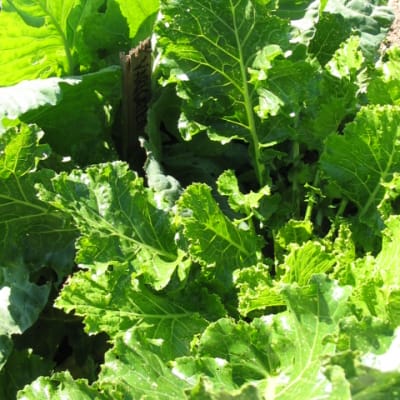
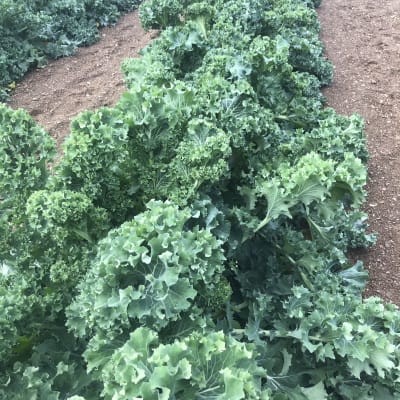
Brassica oleracea (acephala group) (60 days) Open pollinated. Smooth glossy “greasy” greens are delicious steamed. Most delectable early in the season, or late after a nip of frost.
Brassica oleracea (acephala group) (60 days) Open pollinated. Smooth glossy “greasy” greens are delicious steamed. Most delectable early in the season, or late after a nip of frost.
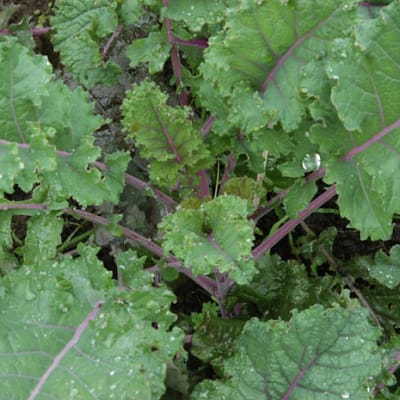
Brassica oleracea (acephala group) (61 days) Open pollinated. Lacinato crossed with Redbor. Curly edges, red veins, purple or blue-green leaves, diverse shapes and colors. Productive and cold-hardy.