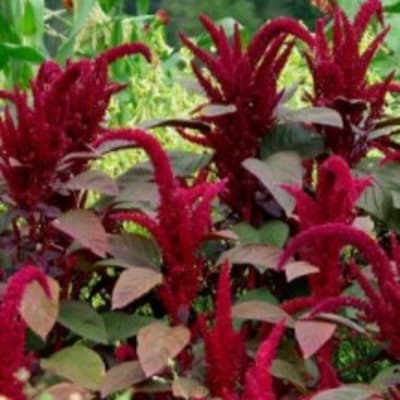
Amaranthus hybridus (65 days to flower, 125 days to seed) Open pollinated. Is it a green vegetable? An ornamental? A gluten-free grain? Why, yes! No wonder Amaranth was sacred in pre-Columbian Mexico.
Hordeum vulgare Annual spring grain. Variety: ‘Robust.’ Suitable for cover-cropping, grain production, home brewing, or forage. Reliable, valuable feed grain for livestock.
Hordeum vulgare Open pollinated. An historic 6-rowed barley selected by Luther Burbank from California hulless barley. In his final seed catalog he called it “one of [his] greatest grain creations.”
Hordeum vulgare Annual spring grain. Truly hulless variety, which makes for quick, easy, low-tech processing. Fast-growing, and competes well with weeds. Tolerates drought and heavy soils.
Echinochloa frumentacea Annual grass. Vigorous and versatile! Good for hay, forage, weed-smothering, building soil, and controlling erosion. Tolerates waterlogged soils, low fertility and cool conditions.
x Triticosecale Wittm. ex A. Camus [Secale × Triticum] Triticale is a hybrid of wheat and rye, and boasts many advantages over plain winter rye. This variety was selected for winter hardiness and consistently high yields of both forage and seed yields.
Superb cover crop mix for fall planting where mechanical tillage is available the following spring. 78% winter rye and 22% hairy vetch. Adds nitrogen to the soil and suppresses weed growth.
This dynamic cover crop duo has become a favorite of growers who value its vigorous growth and soil-building prowess, along with the assurance that it will winterkill up North.
A superior soil-building cover crop mix. The oats come up first and are pulled down by the peas, which are then pulled down by the smothering vetch. Weeds don’t stand a chance in that jungle!
Avena sativa Annual grass. A solid all-purpose oat. Generates biomass and smothers weeds. Tolerates bad weather and soil conditions. Excellent feed for cows and horses.
Avena sativa Annual grass. Vigorous, lush foliage. Significantly more biomass production than common oats, making them superior for cover-cropping/soil-building, and for feeding livestock. Organic seed.
Avena nuda (100 days) Open pollinated. Grain that’s easier to thresh than most other oats, though it still has a small hull that must be removed. A good variety to re-introduce growing grain on home ground.
Oryza sativa (115 days) Open pollinated. Upland short-grain hardy Russian variety adapted to dry-land production. Can withstand a light frost. May be direct seeded in warmer regions.
Oryza sativa (115 days) Open pollinated. Upland variety from Japan. This great-tasting short-grained brown rice is much easier to hull and process with human-powered equipment than other varieties. Does not require flooding.
Oryza sativa (120 days) Open pollinated. Short grain light brown rice, can work in Zone 5b in paddies from direct sowing but does best from transplants.
Oryza sativa (120 days) Open pollinated. Lowland variety from northern Japan. Pearly white short-grain sweet-sticky rice is great for mochi and fries well.
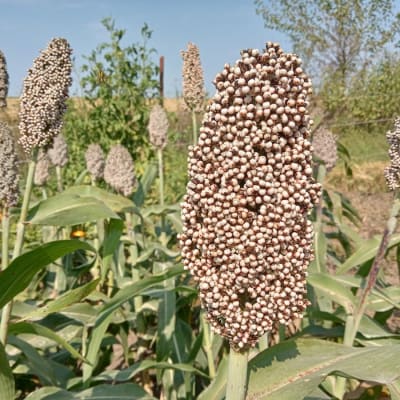
Sorghum bicolor (100 days) Open pollinated. A white-seeded 4' grain sorghum, can be popped, but it is more commonly ground into a mild-flavored flour, cooked as a grain, or sometimes nixtamalized like corn and made into tortillas.
Amaranthus tricolor (120 days) Open pollinated. Very red Jamaican traditional green for Callaloo stew. Beautiful tricolor blaze makes it ornamental as well.
Lupinus mutabilis (130 days, longer to seed) Open pollinated. “Lost” crop of the Incas. Wild-looking 3' lupine native to the high Andes. Attractive, many-colored flowers. Protein-rich seeds.
Triticum aestivum Annual grain. Hard red spring variety that bakers favor for its superior milling and baking qualities. High in protein, very high test weight. Solid disease resistance.
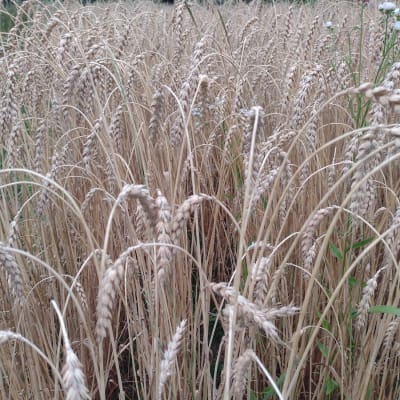
Triticum aestivum Winter annual grain. Extremely cold hardy hard red wheat. Flour has great flavor and texture, and sturdy plants make great straw. Good for small spaces. Well adapted to New England. Will Bonsall fave!
Triticum aestivum Open pollinated. Extremely cold hardy hard red wheat good for small spaces and well adapted to New England. Flour has great flavor and texture, and sturdy plants make great straw.
Secale cereale Winter annual grass. Extremely frost hardy, adaptable and competitive. For cover crop or grain. Deep extensive roots help prevent compaction and improve soil tilth. Vigorous spring regrowth.
Loading...
Grains
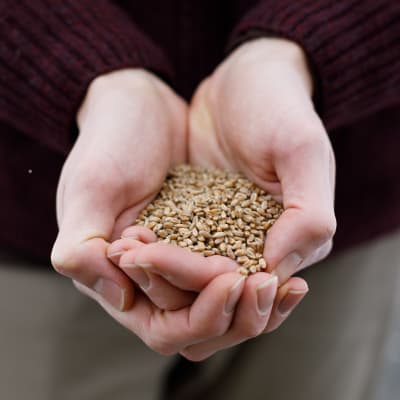
Our grains selections are rare heirloom varieties especially chosen for small-scale production. Revived interest in food security and sovereignty inspires us to seek edible and heirloom grains. In the early 1800s Maine was the breadbasket of the U.S. Wheat and rice do not demand huge space and can be threshed with a little ingenuity. With good fertility, proper spacing and reasonable diligence, it is quite possible to harvest 10 lb of heirloom wheat from 100 plants in a 10x10' plot. A 100' row of rice can yield 6–10 lb.
Larger-scale growers and farmers, those seeking larger quantities of more mainstream varieties, or those looking for cover crops should check out the Organic Growers Supply list of Farm Seed.
Most of of our grains are also decorative in both form and color, making great accents to bouquets and wreaths. For more ornamental grains, see amaranths, ornamental millets and sorghum & broom corn.

 Duborskian Rice - ECOSeedssold out