Showing 8
of 8 items
Shallots
-
ships year-round
-
ships year-round

-
ships year-round
-
ships year-round
-
ships in spring
-
ships in springNero ShallotSetssold out
-
ships in springRoderique ShallotSetssold out
-
ships year-round


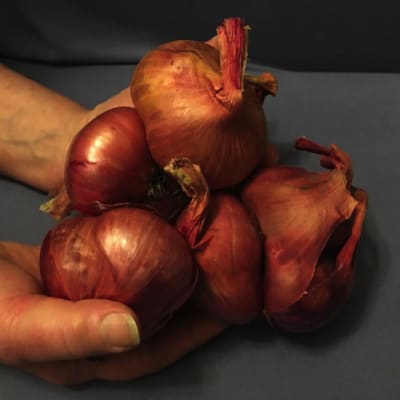
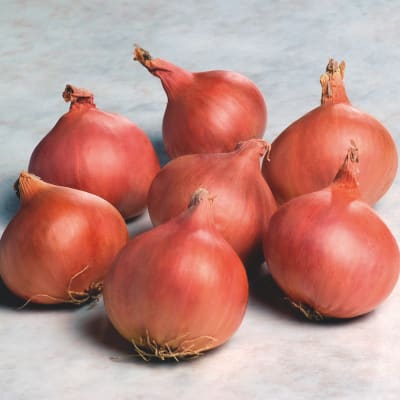


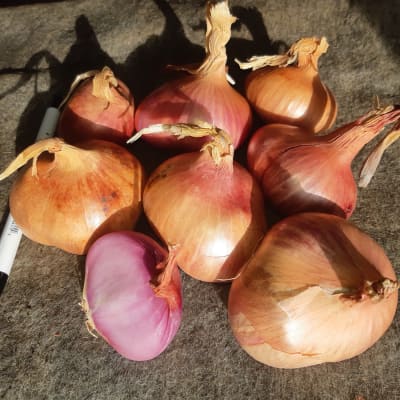

Shallots
The sweetest and mildest member of the onion family, important in Asian, Persian and French cuisines.
Growing Shallots
Most of our sets are long-day varieties, suitable for northern growers. All other factors being equal, alliums grown from seedlings will grow bigger and resist disease better than those grown from sets.
- Planting: Shallots are day-length sensitive—to produce large bulbs, plant in spring as soon as soil is workable. Shallow rooted, onions and shallots require rich weed-free soil and consistent water.
- Seedlings: Set 4–6" apart in trenches in well-dug beds with generous quantities of organic matter. Avoid transplanting next to grass strips; slugs love to dine on tiny allium seedlings. Irrigate seedlings whenever the topsoil dries out.
- Sets: Plant 3" apart in rows 1' apart. Thin to 6" apart as they grow (or plant them 4–6" apart if you don’t want to thin).
- Growing: Mulch when they are 1' tall. During the season, pull any plants that begin to bolt and use them as scallions. It’s a good idea to sidedress once or twice a season, especially close to summer solstice.
- Harvest and Storage: Clean and grade before storage. Ideal storage conditions are temperatures at 32˚ with humidity of 60–70%. If you can’t do that, work to get a total number of 100. For example, at temperatures from 50–55˚, humidity should be 45–50%.