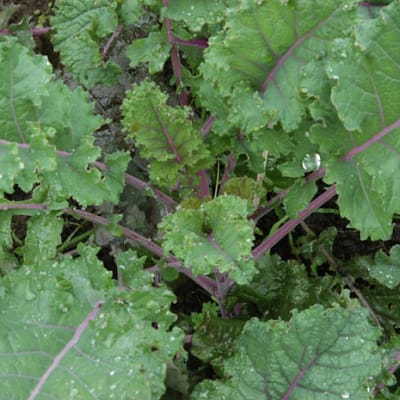
Brassica oleracea (acephala group) (61 days) Open pollinated. Lacinato crossed with Redbor. Curly edges, red veins, purple or blue-green leaves, diverse shapes and colors. Productive and cold-hardy.
read more
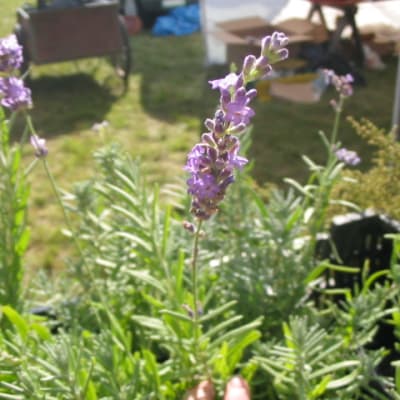
Lavandula angustifolia Open pollinated. Also known as English Lavender. Not a named variety; perhaps a less-refined habit than Vincenza Blue.
read more
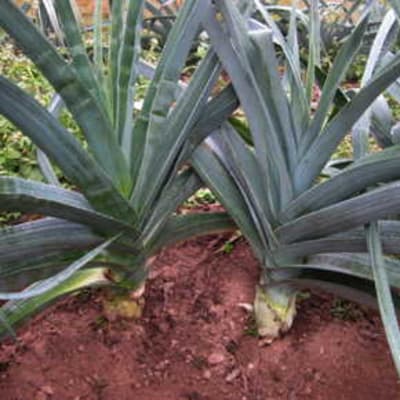
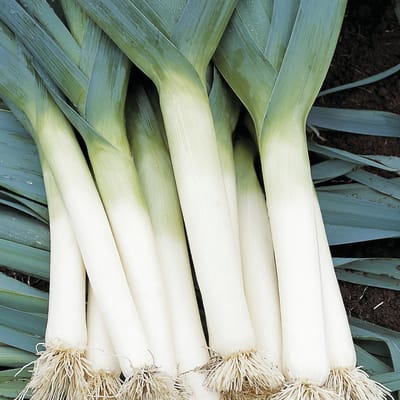
Allium ampeloprasum (porrum group) (84 days) Open pollinated. 6" tall, 3" thick shanks. Blue-green leaves. Very cold tolerant. A good candidate for overwintering.
read more
Allium ampeloprasum (porrum group) (100 days) Open pollinated. Highly uniform and reliable OP leek with impressive cold tolerance, gorgeous dark blue-green leaves, and medium-length white shanks.
read more
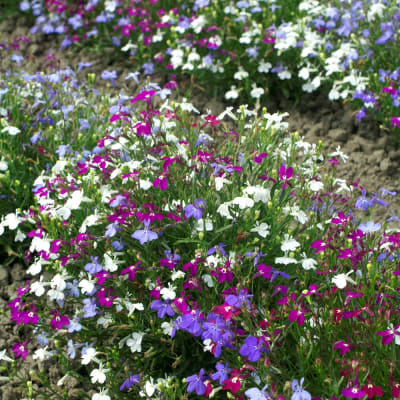
Lobelia pendula (60 days) Open pollinated. Very uniform tiny lush flowers bloom continuously from early summer to early fall to grace your garden, window boxes and hanging baskets. Annual.
read more
Ipomoea purpurea Open pollinated. Cheery masses of white flowers with blue or pink accents in a festive array of patterns. Vigorous 6' climbers.
read more
Convolvulus tricolor (50 days) Open pollinated. Each trumpet appears hand painted, with royal blue exteriors and iridescent white-to-gold centers. Eye-catching in beds, borders and pots. 18" tall bushes are covered in blooms all summer.
read more
Eucalyptus cinerea Open pollinated. Perennial to Zone 8. Charming silvery blue-green 2" leaves make a fabulous bouquet filler that dries nicely and freshens the room with fragrant oils. 2–3' tall.
read more
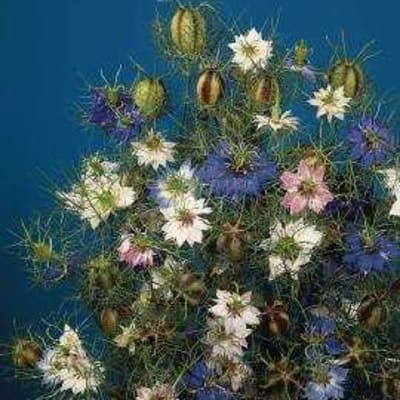
Nigella damascena (70 days) Open pollinated. Mix of pink, blue and white flowers. Spiky decorative seed pods used in dried arrangements. 18".
read more
Pulmonaria 9-12" tall and eventually up to 2' wide. Periwinkle-blue buds open to pink flowers in spring. Large slate-green leaves with silver-white splotches. Woodland plant. Z3.
read more
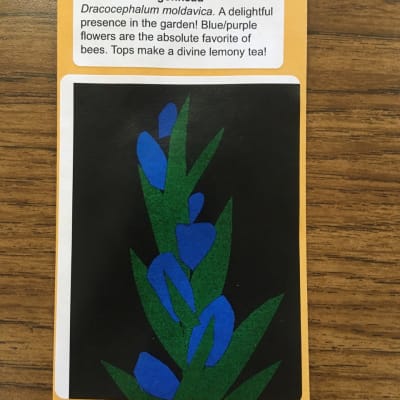
Dracocephalum moldavica (80 days) Open pollinated. Annual. Tea and medicine plant with purple-blue flower spikes that bumblebees love. 18" tall.
read more
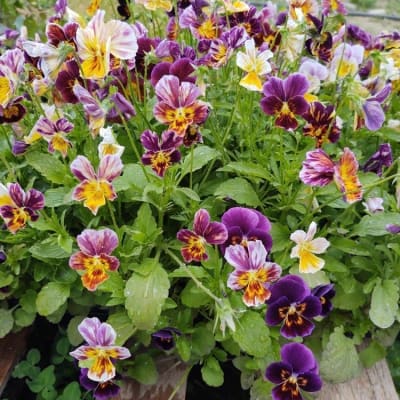
Viola cornuta Open pollinated. Large fragrant flowers in purple, pink, yellow and light blue striped with white and yellow strokes. Dwarf 6" plants.
read more
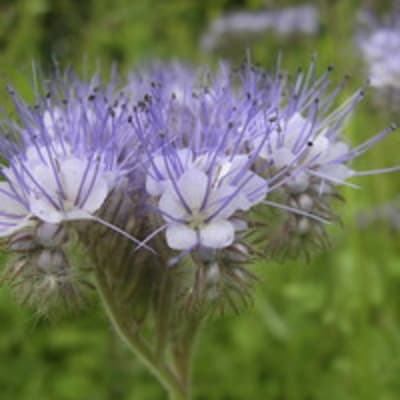
Phacelia tanacetifolia Open pollinated. Small frizzy lavender-blue flowers. Long bloom period. Excellent for pollinators and beneficial insects. Bushy 18-30" plants.
read more
Phacelia tanacetifolia Open pollinated. The small frizzy curling lavender-blue sprays provide high-quality pollen and nectar. Can be used to increase beneficial insect diversity and populations while suppressing weeds. Great for honey.
read more
Salvia viridis Open pollinated. White and blue flowers set off by large pink-to-purple bracts. Leaves entirely green. Remains colorful when dried. 18" stalks.
read more
Scutellaria lateriflora Open pollinated. Native spreading 1–2' perennial with numerous small blue flowers. Also known as Virginia Skullcap. Herbalists use it for headaches and insomnia.
read more
Lathyrus odoratus Open pollinated. Oldest and among the most fragrant of all sweet peas. Deep maroon-purple upper petals with deep violet-blue lower petals. 5' vines.
read more
Lathyrus odoratus × L. belinensis Open pollinated. Pale mauve-pink and deeper-hued lavender-blue wings, grandiflora type, growing to 6', with 3-4 flowers per stem.
read more
Lathyrus odoratus Open pollinated. Semi-dwarf 20" bush-type plants need no support, produce full-length stems. Mix includes chianti, pink, blue-violet and lavender.
read more
Lathyrus odoratus (75 days) Open pollinated. Mixture of crimson, scarlet, white, lavender, deep rose, medium blue and pink. Long stems make ideal cutflowers. 4-6' staking variety.
read more
Lathyrus odoratus (60 days) Open pollinated. Mix of blue, lavender, pink, purple, chocolate, orange and scarlet, streaked with white. Huge blossoms and great as a cutflower. Over 5' tall.
read more
Verbena hybrida var. grandiflora Open pollinated. Mix of deep magenta, white, lilac, blue-violet and fuchsia, with white throats. Multi-branching semi-sprawling habit.
read more
Specialty and Heirloom Squash - Winter Squash Seeds
Cucurbita maxima (112 days) Open pollinated. Appalachian heirloom. Somewhat warty pinkish-orange buttercup-shaped fruits with blue-green markings. Averages two fruits per plant ranging from 5-25 lb each.
read more
Specialty and Heirloom Squash - Winter Squash Seeds
not available yet, check back later
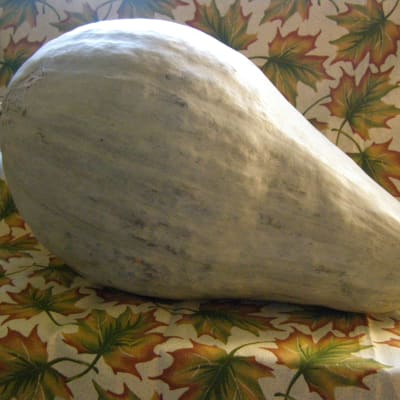
Cucurbita maxima (100 days) Open pollinated. Heirloom banana-type. Slate-blue obpyriform 6-8+ lb fruit. Average 12" long. Excellent flavor and good storage.
read more
A blend of granite meal, sulfur, Tennessee brown rock phosphate, compost and Azomite. Reduces soil pH and provides the nutrients necessary for healthy blueberry plants and good fruit.
read more
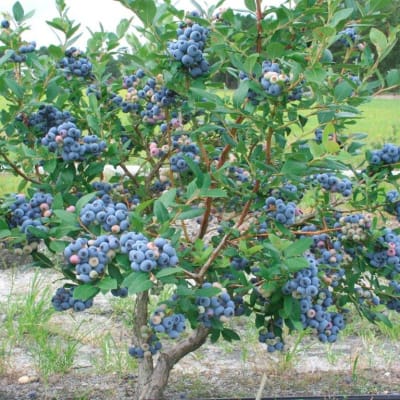
Vaccinium corymbosum Mid-Late. 5-6'. Dense clusters of large fruit with exquisite balanced sweet and tart flavor. Stores well in refrigeration. Large vigorous upright shrub. Z4.
read more
Vaccinium corymbosum Mid-Late. 5-6'. Medium-large berries are mild and sweet with low acidity. Uniform ripening, heavy yields, and good resistance to mummyberry. Z4.
read more
Gaylussacia baccata 1-3' x 2-4'. Cousin of the blueberry. Less acidic, more mildly sweet flavor. Flowers in June, fruits in August. Full sun to part shade but fruits best in sun. Native to eastern U.S. and Canada. Z3/4.
read more
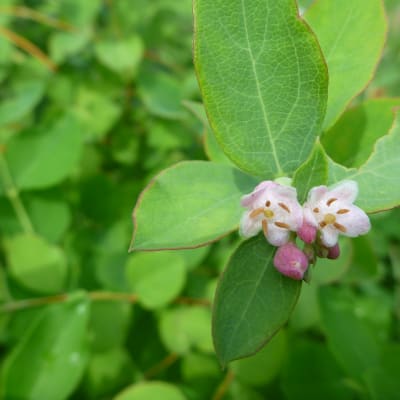
Symphoricarpos albus 5-6' x same. Wildlife and medicinal shrub native to eastern U.S. is quite beautiful all season. Berries are insipid to humans but adored by birds. Easy to grow and adaptable to most conditions. Z3.
read more
Natural phosphorus source. Adequate phosphorus results in more vigorous early root formation, better flower and seed production, better growth in cold temperatures, and better water use efficiency.
read more
Malus spp. This is a twig for grafting. Winter. Classic all-purpose Vermont heirloom. Large dark red striped fruit. Mild subacid flavor, moderately juicy and crisp. Z3.
read more
Malus spp. Winter. Uniquely dark fruit with well-balanced flavor. Excellent pies and cider. Maine heirloom. Best eating late Dec. to March. Great keeper. Z4.
read more
Malus spp. This is a twig for grafting. Winter. Uniquely dark fruit with well-balanced flavor. Excellent pies and cider. Maine heirloom. Best eating late Dec. to March. Great keeper. Z4.
read more