
Lima Beans

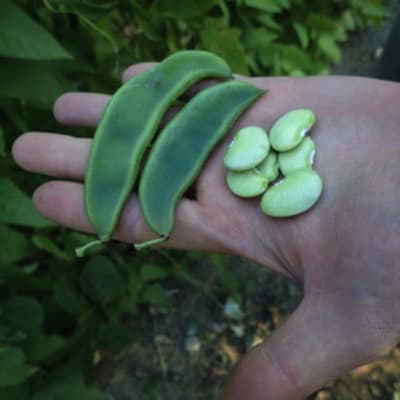



Lima Beans
- About 30-60 seeds/oz.
- Days to maturity are from seeding date
Originally from Peru where they were cultivated 4,000 years ago by the Lima culture.
Culture: Lima beans require more heat than bush beans and are indifferent performers in cold wet summers. Minimum soil temperature 60°, optimal range 70–85°. Tender, will not survive frost. Plant 3–4 seeds/ft in rows 24–30" apart. Plant as other bush or pole beans. Bush limas can be prone to twining (developing viny tendrils). Harvest at shelling stage when beans bulge in fading pliable pods, before pods start to dry out. Pick frequently for maximum yields, but avoid disturbing foliage in wet weather to prevent spread of fungal diseases.
Beans
- All beans are open-pollinated.
- Days to maturity are from seeding date.
Culture: Tender, will not survive frost. Inoculate with a legume inoculant, then plant seeds 3–4" apart in rows 24–30" apart after all danger of frost has passed and soil has warmed. Minimum germination soil temperature 60°; optimal range 70–80°. White-seeded beans are generally more sensitive to cold soil temps than dark-seeded varieties. Legumes have moderate fertility needs and can fix their own nitrogen.
Saving Seed: Saving bean seed is easy! Leave pods on the plants to dry. Hand shell, or stomp pods on a tarp. To ensure true-to-type seed, separate varieties by 30 feet.
Diseases:
- ANTH: Anthracnose
- BBS: Bacterial Brown Spot
- CBMV: Common Bean Mosaic Virus
- CTV: Curly Top Virus
- DM: Downy Mildew
- HB: Halo Blight
- NY 15: NY 15 Mosaic Virus
- PM: Powdery Mildew
- PMV: Pod Mottle Virus
- R: Rust
- SC: Sclerotina
White mold, Sclerotinia sclerotiorum, affects more than 300 plant species. In beans, low humidity, good air circulation and wider spacing, both between plants and between rows, reduce the likelihood of this soil-borne infection.