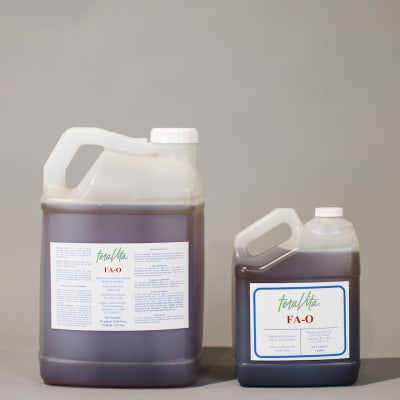
NPK: 2-5-0.2. Fish heads, bones, skin and guts finely ground and then enzymatically digested. Can be used as foliar feed. Made from wild fish scraps from the fishing industry along the Great Lakes.
NPK: 2-5-0.2. All the NPK of fish, along with the micronutrients and growth hormones of kelp. Encourages vigorous rooting. Improves plant vigor and stress resistance, increases storage life of produce
Fulvic acid is a powerful antioxidant and chelator: one molecule can transport 60 or more minerals into plant cells for a more efficient and effective fertilization program
Molasses is a source of important nutrients, including manganese, magnesium, copper, potassium and calcium. Food grade, shelf stable. Plants and beneficial microbes have a sweet tooth, too!
Humic acids perform many complex functions. They neutralize soil pH, prevent leaching of trace minerals, stimulate growth of foliage and roots significantly, and much, much, more!
Calcium helps strengthen plants’ cell walls, improving crop quality, disease resistance and storage capacity. Can help prevent problems like blossom end rot and bitter pit.
Copper is necessary for efficient photosynthesis and respiration and affects the sugar content and flavor of produce. Contains 4% chelated copper derived from copper sulfate.
Iron is essential for chlorophyll development and function, and is also involved in nitrogen fixation by legumes. Contains 5% chelated iron derived from ferrous sulfate.
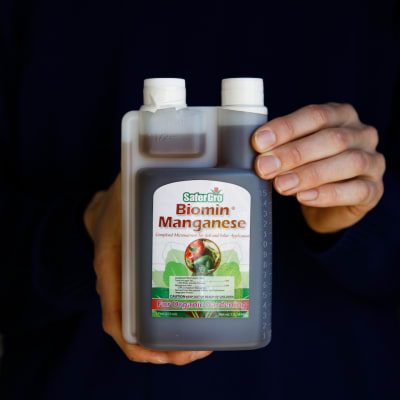
Manganese helps plants to synthesize chlorophyll and is used in electron transport during photosynthesis. Contains 1% nitrogen from vegetable protein and 5% chelated manganese.
Zinc is a component of auxin, an essential growth hormone, and is also necessary for proper root development. Improves cold tolerance. Contains 7% zinc derived from zinc sulfate.
NPK: 4-4-0.5. Contains fish hydrolysate, kelp extract, humic and fulvic acids, and a dash of chilean nitrate to boost the nitrogen levels for rapid vegetative growth.
Loading...
Soil Amendments and Fertilizers
Thriving sustainable agriculture is built on the ground of a healthy soil. In fact, organic certification requires a soil management plan. Do a soil test to determine your soil’s needs before embarking on a program of soil improvement. Check with your local Cooperative Extension for testing in your area, or consider our soil testing and recommendation service.
Soil amendments used with a program of crop rotation, composting and cover cropping can enhance fertility, improve soil tilth, promote disease resistance, support beneficial soil microorganisms, and even help restore balance to the garden and the world around it. Application rates vary depending on soil type and results of soil tests.
Fertilizers provide nitrogen and other nutrients in a form that is readily available to plants. Organic fertilizers can provide both an immediate boost and additional long-term fertility, feeding both the plants and the organisms that maintain soil health. We also offer soil amendments that have limited available plant nutrients but help to remineralize the soil, improve soil structure, or provide a long-term slow-release source of plant nutrients. Foliar sprays get nutrients directly to the leaves and can increase resistance to disease and to insect infestation.
Analyses provided here are those provided by the manufacturers, or, if none are available, from a Maine state lab test performed on our most recent lot: there is some variability in the nutritional analysis of natural fertilizers, so view these numbers as guides, not gospel. Fertilizers should be used as a supplement to, not a replacement for, the nutrients provided by healthy soil. Sustainability requires developing a long-term plan of cover-cropping, green manuring and composting.