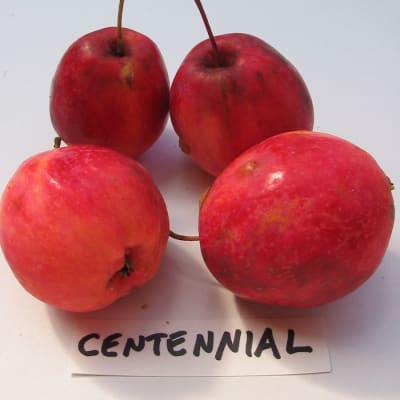
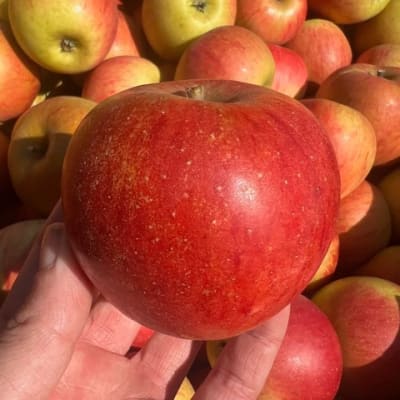
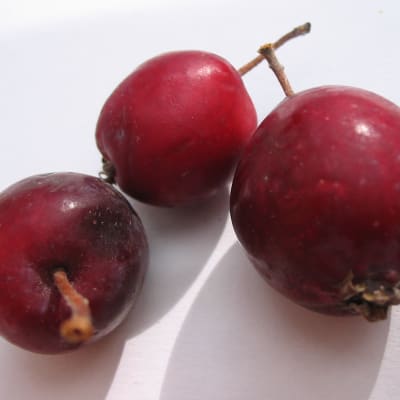
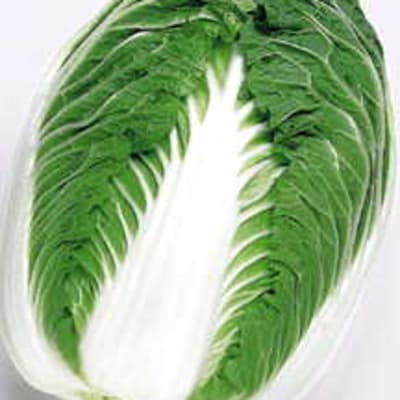
Malus spp. Late summer-early fall. Summer-Fall. Very hardy high-quality cooking apple. Large and glossy purplish-red roundish fruit. Firm juicy flesh. Good for fresh cider. Stores 2 months. Z3.
read more
Malus spp. This is a twig for grafting. Late summer-early fall. Summer-Fall. Very hardy high-quality cooking apple. Large and glossy purplish-red roundish fruit. Firm juicy flesh. Good for fresh cider. Stores 2 months. Z3.
read more
Malus spp. This is a twig for grafting. Late summer. Small fresh-eating crab about the size of a small plum. Tender crisp juicy flesh. Not sweet. Good in sauce. Highly scab resistant. Z2.
read more
Malus spp. Early fall. Firm, crisp, juicy dessert crab excellent for fresh eating, pickles and sauce. Stores a month. Beautiful mid-late blooms. Z3.
read more
Malus spp. This is a twig for grafting. Early fall. Firm, crisp, juicy dessert crab excellent for fresh eating, pickles and sauce. Stores a month. Beautiful mid-late blooms. Z3.
read more
Malus spp. Early fall. Also called Snow. Ruby-red fruit with tender white flesh. Excellent fresh eating, sauce and fresh cider. Keeps until late December. Z3.
read more
Malus spp. This is a twig for grafting. Early fall. Also called Snow. Ruby-red fruit with tender white flesh. Excellent fresh eating, sauce and fresh cider. Keeps until late December. Z3.
read more
Malus spp. This is a twig for grafting. Winter. Excellent storage apple with firm crisp juicy mild yellow flesh. Good for fresh eating and baking. Z3.
read more
Malus spp. Fall-winter. The most distinctive, complex, unusually flavored apple you'll ever try! Hardy, productive, reliable. A staff favorite. Z3.
read more
Malus spp. This is a twig for grafting. Fall-winter. The most distinctive, complex, unusually flavored apple you'll ever try! Hardy, productive, reliable. Z3.
read more
Malus spp. This is a twig for grafting. Winter. Medium-large apple. Sweet, juicy, snappy fresh eating. Keeps up to seven months. Tends to bear annually. Scab-resistant. Z3.
read more
Malus spp. This is a twig for grafting. Summer. Bred from Yellow Transparent. Attractive, smooth skinned light green apple that appears to glow on the tree when ripe in mid summer. Very tart fresh eating. Great for sauce, summer pies. Z3.
read more
Malus spp. Be the proud keeper of a sister tree to one of many rare varieties planted at the Maine Heritage Orchard. $30 from the sale supports the project.
read more
Malus spp. This is a twig for grafting. Winter. A very tart dessert apple and a supremely wonderful midwinter pie apple. Will keep all winter in the root cellar, with peak flavor in Feb. Blooms early-midseason. Z3.
read more
Malus spp. Late fall. Exquisite dessert fruit is fine-grained juicy and snappy. Clean fruity finish with superior aromatics. Keeps until March. Likely hardy to Z3.
read more
Malus spp. Fall. Medium-sized apple. Sweet, nutty and spicy flavors. Fine-textured crisp flesh. Keeps till midwinter. Some resistance to scab. Z3.
read more
Malus spp. Fall. Medium-sized. Perfect texture and complex flavor. Famous all-purpose variety. Especially good pies. Small-med size tree. Z3.
read more
Malus spp. This is a twig for grafting. Summer. Medium-sized fruit with almost solid beet red flesh: a real eye popper! Very good and extremely tart. Good addition to cider and sauce. Z3.
read more
Malus spp. Late summer. Medium-sized, highly-flavored fruit. Good balance of acid/sweet. Crisp and juicy fresh-eating. Stores up to seven weeks. Z3.
read more
Malus spp. Classic culinary crab. Still found in old Maine dooryards. Apricot-pink buds, large fragrant pure white single flowers. Great for canning, pickling, delicious sauce and flavorful ruby-red jelly. Z2.
read more
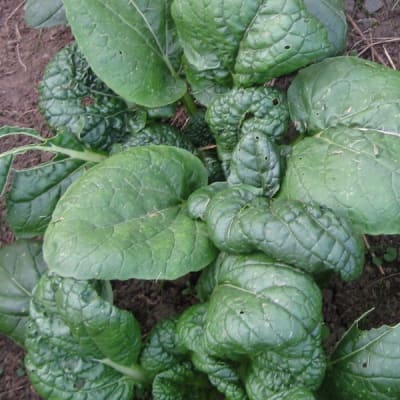
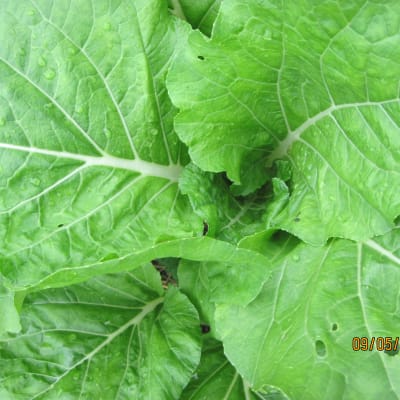
Brassica rapa (narinosa group) (45 days) Open pollinated. Spoon-shaped dark green leaves in compact rosettes. Very hardy. Cut-and-come-again.
read more
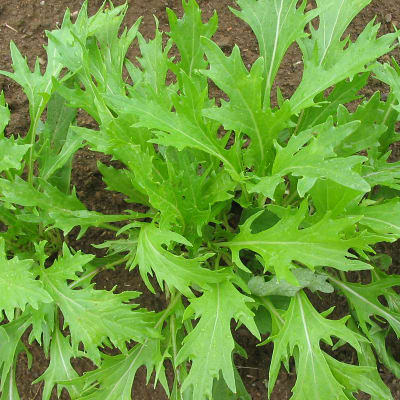
Brassica rapa (japonica group) (40 days) Open pollinated. Japanese heirloom. Deeply cut fringed leaves on slender white stalks. For microgreens, cut-and-come-again, succession plantings and baby leaf production.
read more
Brassica juncea (40 days) Open pollinated. Bold purple-blushed delicately serrated mizuna-type leaves with sweet and spicy flavor. For spring and fall plantings. Bolts in heat.
read more
Brassica rapa (45 days full size; 21 baby) Open pollinated. Grows in rosettes like tatsoi, but bigger, more upright with leaves less shiny and more puckered. Harvest young for salad greens or mature for braising.
read more
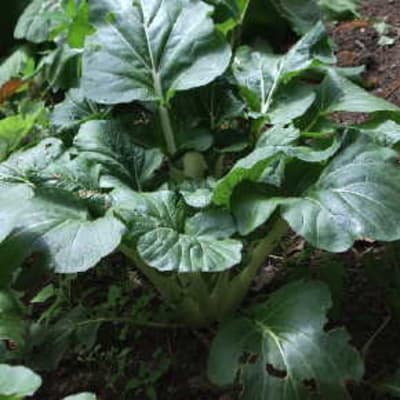
Brassica rapa (chinensis group) (45 days) F-1 hybrid. Baby pac choi with green stems, likes cool temperatures but resists bolting. Vase-shaped 11" plants have broad green petioles.
read more
Brassica rapa (chinensis group) (50 days) F-1 hybrid. Uniform pac choi heads with dark green leaves and thick succulent basal stems. For summer and fall crops.
read more
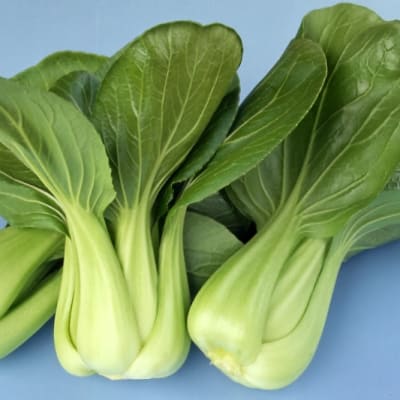
Brassica rapa (chinensis group) (50 days) Open pollinated. Classy pac choi with celery-like white stems and vase-shaped 15-18" tall heads. Succulent stems and tender greens.
read more
Phaseolus vulgaris (54 days) Open pollinated. Straight round 5-6" tender yellow pods with green tips and great flavor. High yields, holds well.
read more
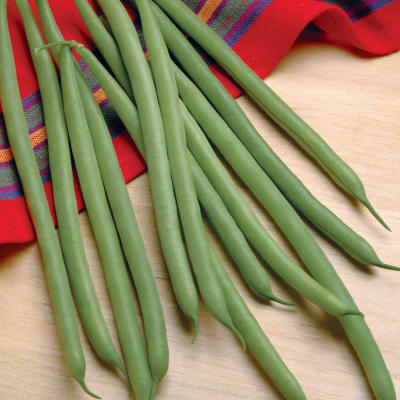
Phaseolus vulgaris (56 days) Open pollinated. High yields of tasty 5–7" straight slender round dark green beans. Holds quality well both on the plant and after harvest.
read more
Phaseolus vulgaris (56 days) Open pollinated. High yields of tasty 5–7" straight slender round dark green beans. Holds quality well both on the plant and after harvest.
read more
Phaseolus vulgaris (50 days) Open pollinated. Concentrated sets of 5-5.5" pods. High yields even in adverse conditions. A popular favorite. Purple seed.
read more
Phaseolus vulgaris (60 days) Open pollinated. Fortex begins producing early and keeps going into fall, long after others have quit. Its flavor and texture reign supreme, a distinctive nutty taste that can be enjoyed raw or cooked.
read more
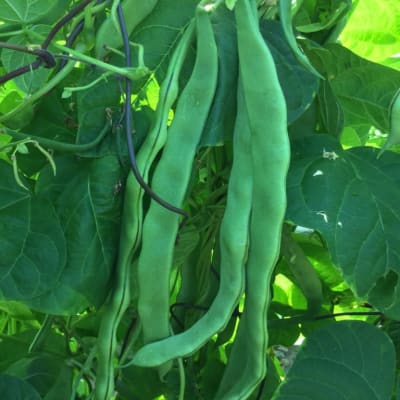
Phaseolus vulgaris (55 days) Open pollinated. Also known as Kwintus. A superior early pole bean. Somewhat flattened pods are slow to get tough.
read more
Phaseolus vulgaris (85 days) Open pollinated. Dense foliage produces medium runners, lavender flowers and good yields of thin delicate pods each containing 5-6 lustrous black seeds.
read more
Phaseolus vulgaris (70 days shell, 90 days dry) Open pollinated. White Cannellini bean. 5-6" short fat pods contain 5 plump seeds. Excellent flavor.
read more
Penstemon hirsutus 16-30" tall. Shorter than P. digitalis, with fuzzy stems topped by clusters of slender tubular nodding 1" lavender flowers with arching white lips. Z3.
read more
Beta vulgaris (54 days) Open pollinated. Gene pool based on 3 heirlooms. Expect 3 colors: pink-red with orange, bright gold and vivid orange. 3.5 x 7-8" tapered form.
read more
Beta vulgaris (55 days) Open pollinated. Round rose-gold beet. Zoned white-yellow raw interior cooks to light orange. Short light green tops with gold stems and veins.
read more
Beta vulgaris (60 days) Open pollinated. Grown for greens, not roots. Large glossy reddish-purple leaves. Holds quality in summer but best in fall and under winter cover.
read more
Beta vulgaris (60 days) Open pollinated. Grown for greens, not roots. Large glossy reddish-purple leaves. Holds quality in summer but best in fall and under winter cover.
read more
Beta vulgaris (55 days) Open pollinated. Selection from heirloom. Light red exterior; interior rings of pink and white. Green tops. Exceptional sweetness.
read more