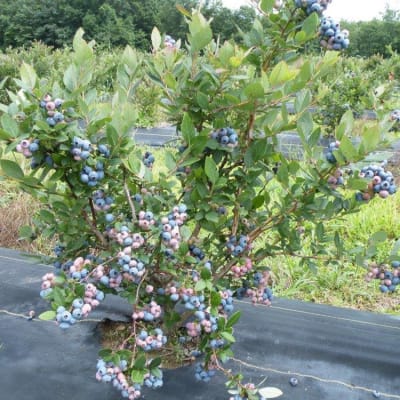
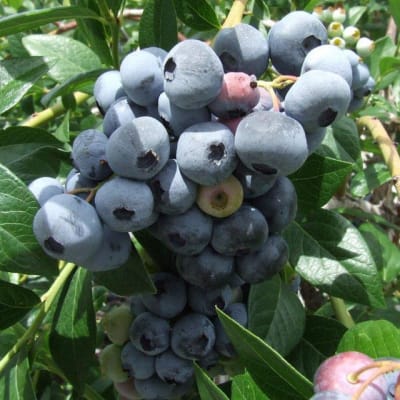
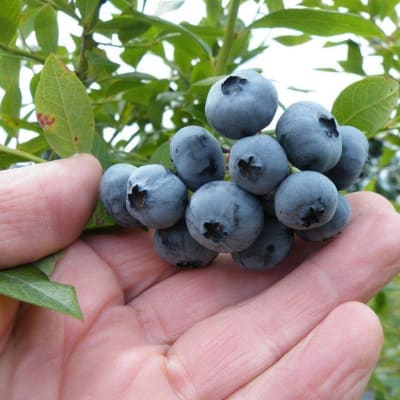
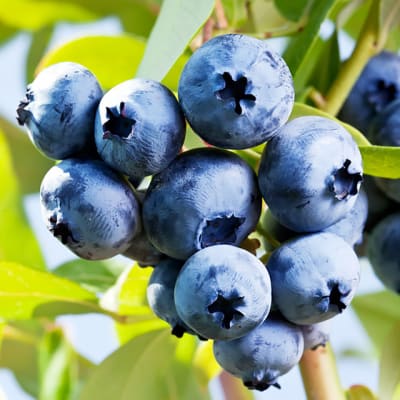
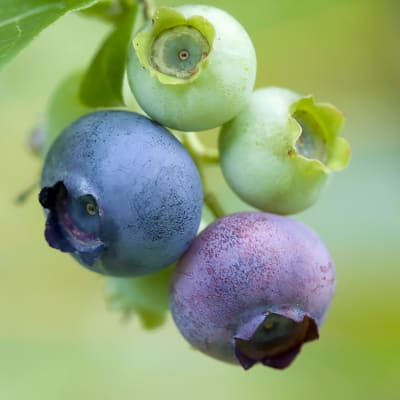
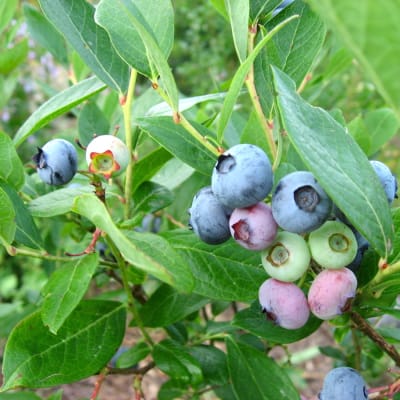
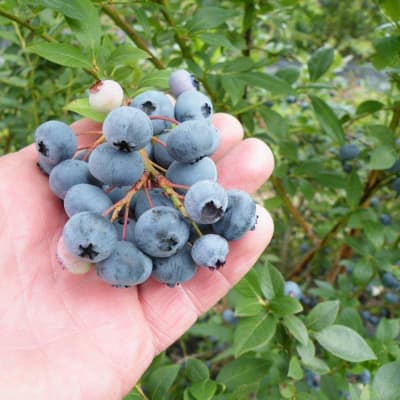
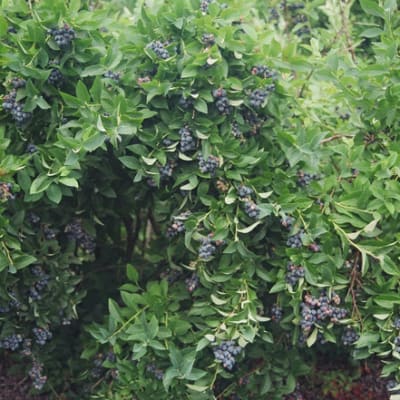
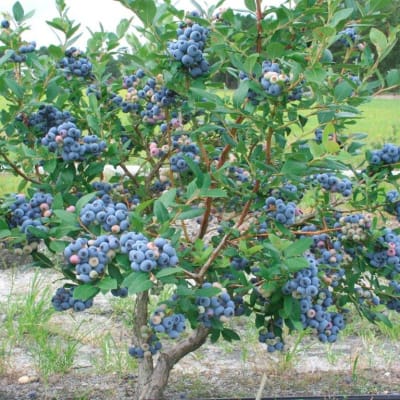
Vaccinium corymbosum Early-Mid. 5-7'. One of the best blueberries for eating, freezing, canning and preserving. Loose clusters are easy to harvest. Productive bush is vigorous and upright. Disease resistant. Z4.
Vaccinium corymbosum Early-Midseason. 4-6' Large firm high dessert quality berries are considered the best-tasting by nearly everyone who grows highbush blueberries. Very vigorous and consistently productive. Z4.
Vaccinium corymbosum Early. 4-6'. Medium-large light blue firm fruit with excellent sweet flavor. Flavor holds up better than other varieties in the freezer. Vigorous upright high-yielding bush. Z4.
Vaccinium corymbosum Mid-Late. 5-6'. Dense clusters of large fruit with exquisite balanced sweet and tart flavor. Stores well in refrigeration. Large vigorous upright shrub. Z4.
Vaccinium corymbosum Mid-Late. 5-7'. Beloved old standard from 1928. Productive, adapted to a wide range of soils, highly praised, easy to grow and suited to the New England climate. Vigorous erect hardy bush. Z4.
Vaccinium corymbosum Mid. 6-8' × 5'. High-quality medium light blue berries are firm, sweet and low in acidity. High yielding. Upright bush has shown some tolerance to clay soils. Z5.
Vaccinium corymbosum Mid-Late. 5-6'. Medium-large berries are mild and sweet with low acidity. Uniform ripening, heavy yields, and good resistance to mummyberry. Z4.
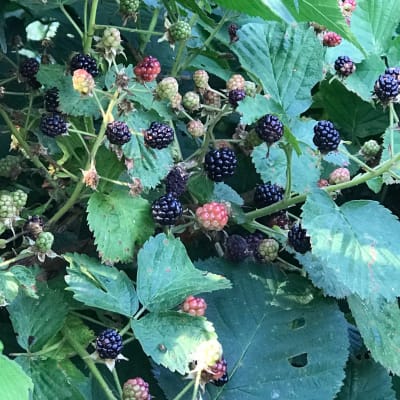
Rubus spp. Midsummer. Moderately large and quite juicy fruit with true blackberry taste. Highly productive. Has survived Maine winters for over a century! Z3/4.
Vaccinium macrocarpon White skin. Albino berries with red blush. Selected from a seedling found growing in a bog on an island off the coast of Maine. Lasts up to 6 months in cold storage. Z2.
Vaccinium macrocarpon Red skin. 4-10". The cranberry of holiday sauces, bread and jelly. Dense low lustrous evergreen groundcover loaded with large red berries in fall. Z2.
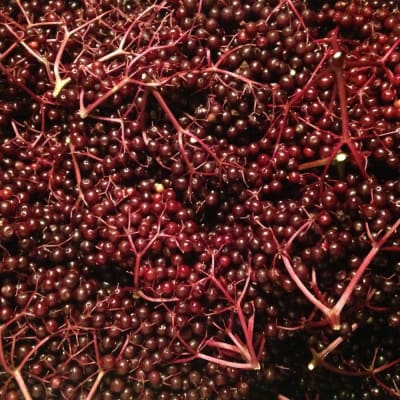
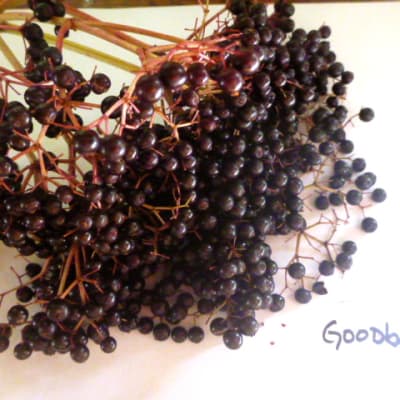
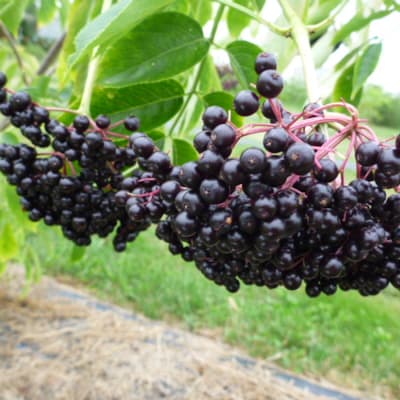
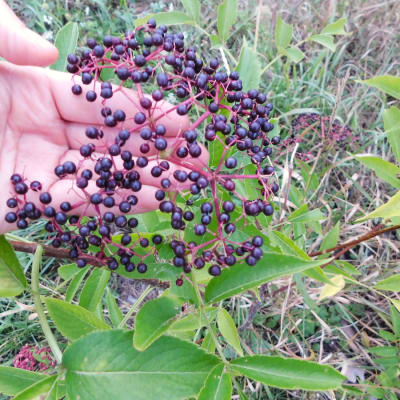
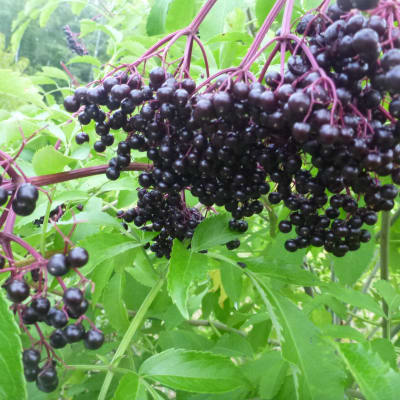
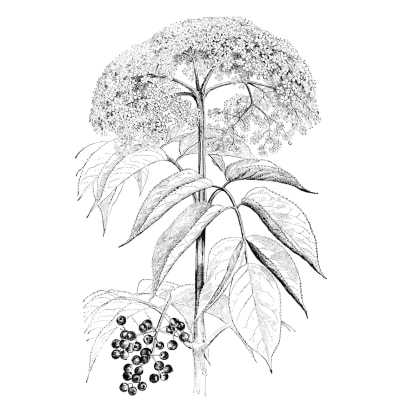
Sambucus canadensis 6-12' x same. Large elderberries and fruit clusters make for easy and fast picking. Very large vigorous strong productive bush. Z3.
Sambucus canadensis 6-12' x same. Each grown from a cold-hardy seed and will be a totally unique plant. Some of our best plants grew from batches of such seedlings. Z3.
Sambucus canadensis 6-12' x same. Fedco intro. Sourced from a wide swath of plants growing in Aroostook County. Robust elderberry with consistently high fruit yields. Z3.
Sambucus canadensis 4-10' x same. An old reliable elderberry, considered by some to be the largest-fruited and heaviest-bearing cultivar. Rounded shrub. Z3.
Gaylussacia baccata 1-3' x 2-4'. Cousin of the blueberry. Less acidic, more mildly sweet flavor. Flowers in June, fruits in August. Full sun to part shade but fruits best in sun. Native to eastern U.S. and Canada. Z3/4.
Diospyros virginiana 35-60' x 20-35'. Medium-sized native tree produces edible orange fruit used in pies, jams and jelly. May not always ripen north of Boston. Plant two or more for fruit. Z4/5.
Prunus americana 15-20' Not a hybrid, but it may be the best pollinator for hybrid plums. Very decent red, yellow and orange 1" plums, suitable for fresh eating, canning and freezing. Z3.
Prunus nigra Late summer, yellow flesh. Yellow flesh is sweet and juicy, good for eating right off the tree, in jams, chutney, tarts or infused in vodka! Tree is upright, spreading and a prolific annual bearer. Very cold hardy. Z3.
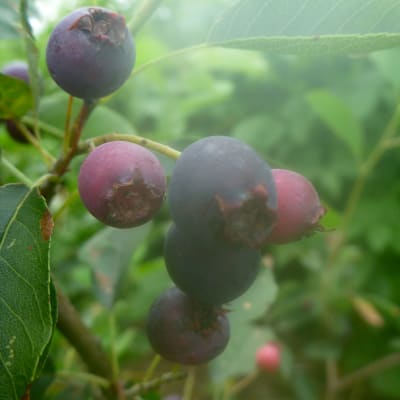
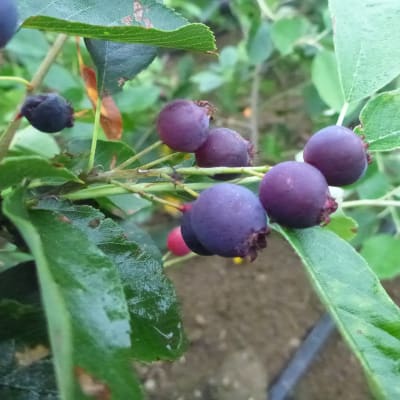
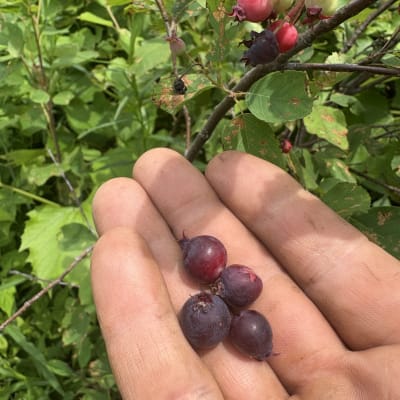
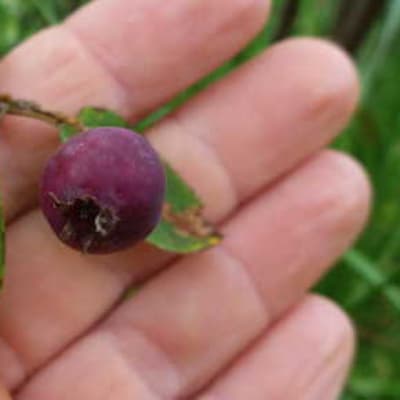
Amelanchier stolonifera 3-5' x same. Berries are small but very flavorful—perfect combo of sweet and tangy. Would do well in a rock garden, hedge or thicket. Native. Z4.
Amelanchier stolonifera × A. alnifolia 5-8' x 5'. Medium-large berries are mildly sweet with no trace of acid. Hefty fruits are proving crack-resistant. Very uniform ripening pattern. Z3.