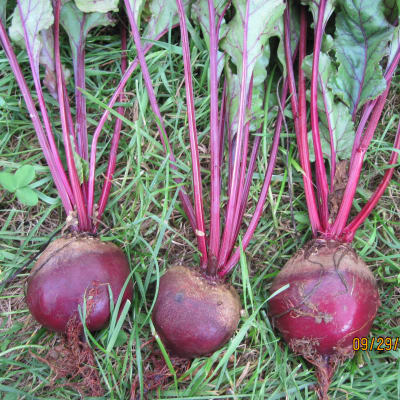
Beta vulgaris (60 days) Open pollinated. Grown for greens, not roots. Large glossy reddish-purple leaves. Holds quality in summer but best in fall and under winter cover.
read more
Beta vulgaris (60 days) Open pollinated. Grown for greens, not roots. Large glossy reddish-purple leaves. Holds quality in summer but best in fall and under winter cover.
read more
Beta vulgaris (48 days) Open pollinated. From 1911, beloved by commercial growers and home gardeners. Early beet greens and bunching beets. Quick cold soil emergence. Attractive purple tops.
read more
Beta vulgaris (48 days) Open pollinated. From 1911, beloved by commercial growers and home gardeners. Early beet greens and bunching beets. Quick cold soil emergence. Attractive purple tops.
read more
Metasequoia glyptostroboides 100'. A spectacular ornamental tree! Wide trunk with iridescent golden-orange bark and bright green deciduous needles turn orange in the fall. Highly adaptable. Z4.
read more
Abies koreana 15-30' x 6 -12' Upright 3" purple-blue cones perch atop bright green boughs on a conical to pyramidal tree. Nice as a specimen or in hedges. Z5.
read more
Coreopsis tinctoria Open pollinated. Beautiful native ornamental. Provides a full palette of color from yellows and greens to rusts and browns-and even black.
read more
Cucurbita pepo var. ovifera (100 days) Open pollinated. A vivid mix of greens, yellows, creams and whites on straight and curved necks, all with double sets of wings and fins.
read more
Brassica napus (pabularia group) (60 days) Open pollinated. Unsurpassed tenderness and flavor. Green oakleaf with purple veining darkens in cold weather. Wilts quickly once picked. Great microgreens.
read more
Brassica napus (pabularia group) (60 days) Open pollinated. Unsurpassed tenderness and flavor. Green oakleaf with purple veining darkens in cold weather. Wilts quickly once picked. Great microgreens.
read more
Urtica dioica Open pollinated. Perennial. Grows 3-6'. Young shoots and leaves are delicious steamed as spring greens, very high in minerals and protein.
read more
Sempervivum Low-growing rosette-forming succulents produce runners and babies. Drought and heat tolerant. Cold-hardy too! Colorful mix of reds, greens and purples. Z3.
read more
Cut garlic scapes, harvest tomatoes, greens and herbs. A lightweight harvest shear that gets the job done, but is inexpensive enough for apprentice crews or careless gardeners.
read more
Brassica oleracea (acephala group) (62 days) Open pollinated. Italian heirloom also known as Lacinato and Tuscan Black. Very dark green wrinkled, pebbled sturdy leaves extend like palm fronds from stalk.
read more
Brassica oleracea (gongylodes group) (130 days) Open pollinated. Czechoslovakian heirloom. Green kohlrabi can exceed 10" and 10 lb without getting woody. Crisp white interior is mildly tangy.
read more
Lactuca sativa (49 days) Open pollinated. Unique Butterhead/Romaine combination with ruffled savoyed leaves dappled red and green. Very crisp and buttery.
read more
Malus spp. Winter. Famous European cooking apple. Big blocky fruit patched with green and russet. Cooks and bakes beautifully. Keeps well. Z4.
read more
Malus spp. This is a twig for grafting. Winter. Famous European cooking apple. Big blocky fruit patched with green and russet. Cooks and bakes beautifully. Keeps well. Z4.
read more
Malus spp. Summer. Bred from Yellow Transparent. Attractive, smooth skinned light green apple that appears to glow on the tree when ripe in mid summer. Very tart fresh eating. Great for sauce, summer pies. Z3.
read more
Malus spp. This is a twig for grafting. Summer. Bred from Yellow Transparent. Attractive, smooth skinned light green apple that appears to glow on the tree when ripe in mid summer. Very tart fresh eating. Great for sauce, summer pies. Z3.
read more
Malus spp. Ornamental flowering crabapple with beautiful rose-like blossoms and bitter green fruit. Very high in tannin. Great for cidermakers! Blooms late. Z4.
read more
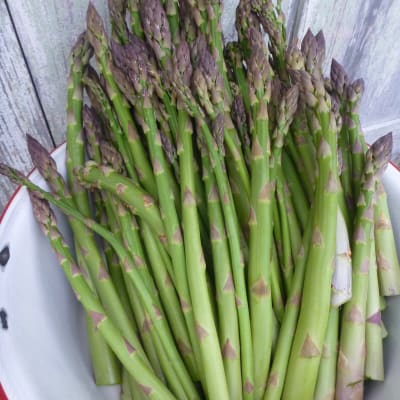
Asparagus officinalis Heirloom. Large early green stalks tolerate heat well and demonstrate good resistance to rust. Early, vigorous, uniform. Planted in American gardens for more than a century. Z3/4.
read more
Asparagus officinalis High-yielding good-quality tender green spears are long-lived and very cold hardy. On the rise as an excellent replacement for Jersey, even outproducing Jersey in northern Minnesota trials! Z3.
read more
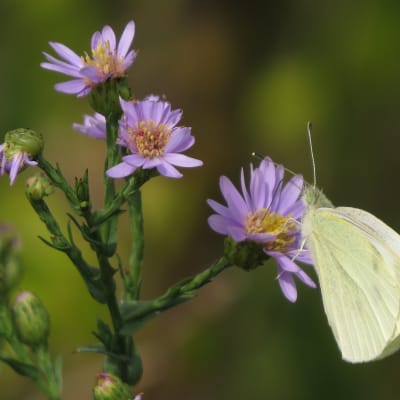
Symphyotrichum laeve 3-4' tall. North American native has Loose clusters of lavender-blue blossoms with yellow eyes. Smooth blue-green foliage. Attractive to pollinators in late season. Z3.
read more
Astilbe chinensis 16-24" tall. Creamy pink-white dense plumes fade to green—not brown—to extend this Astilbe’s time to shine. Full to part shade. Z3.
read more
Ocimum basilicum minimum (70 days) Open pollinated. 8" and maintains a compact mound of light green leaves and white flowers. Its leaves are small, thin and strongly scented.
read more
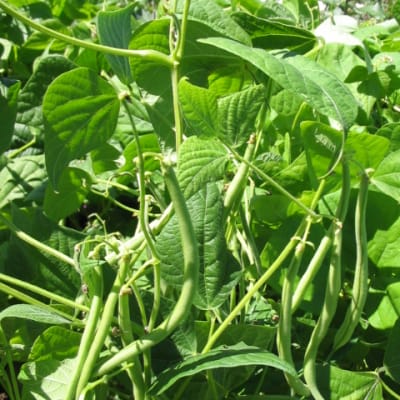
Phaseolus vulgaris (61 days) Open pollinated. Dark green straight 6-8" filet pods with excellent flavor. Heavy producer. Speckled brown seed.
read more
Phaseolus vulgaris (57 days) Open pollinated. A very refined haricot vert for home gardeners. Exquisitely tender, delicately flavored dark green pods are excellent raw with minimal bitterness.
read more
Phaseolus vulgaris (54 days) Open pollinated. Straight round 5-6" tender yellow pods with green tips and great flavor. High yields, holds well.
read more
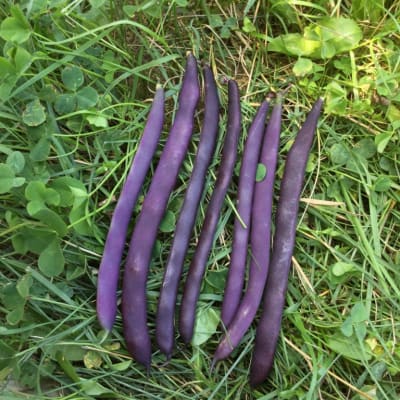
Phaseolus vulgaris (72 days snap) Open pollinated. Bluish-purple pods and green leaves tinged with purple. Harvest at 3-5". Can serve as a snap, shell or dry bean. Chocolate-colored seed.
read more
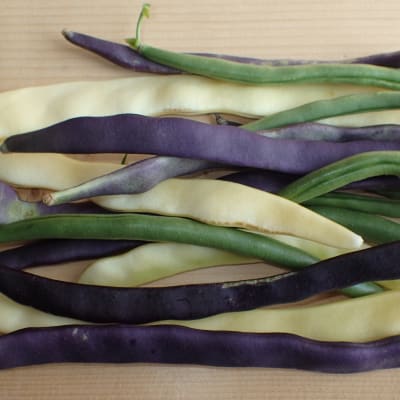
Phaseolus vulgaris (60-72 days) Open pollinated. We combine green, yellow, purple and striped varieties of staggered maturity into one packet. Varieties, our choice, will vary from year to year according to availability.
read more
Phaseolus vulgaris (55 days) Open pollinated. 7–9' vines bear long stringless round-podded very dark green fresh beans, coming early. 2017 AAS.
read more
Phaseolus vulgaris (59 days) Open pollinated. Produces heavy yields of fleshy medium-green 5" pods that are slow to develop seeds. Pods aren’t as wide as Roma II, but walls are thicker and juicier.
read more
Glycine max (91 days) Open pollinated. Vigorous thigh-high vines make early concentrated sets of light green pods, averaging two beans per pod.
read more
Beta vulgaris (55 days) Open pollinated. Round rose-gold beet. Zoned white-yellow raw interior cooks to light orange. Short light green tops with gold stems and veins.
read more
Beta vulgaris (55 days) Open pollinated. Selection from heirloom. Light red exterior; interior rings of pink and white. Green tops. Exceptional sweetness.
read more
Beta vulgaris (54 days) Open pollinated. Gold beet with Lutz shape, size and mild sweet flavor. Green tops with some golden stem. Golden orange roots with orange shoulders.
read more
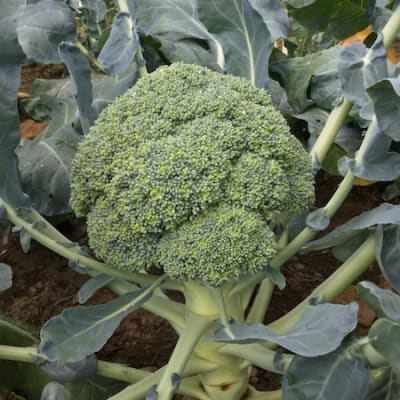
Brassica oleracea (botrytis group) (75 days) F-1 hybrid. Dark green large heads with medium-fine bead. Heat-tolerant in spring and summer, also good for fall harvests.
read more
Brassica oleracea (botrytis group) (62 days) F-1 hybrid. Consistent 6–8" high-domed heads with gorgeous blue-green beads. Resilient variety developed for growers in the Northeast.
read more
Brassica oleracea (botrytis group) (91 days) F-1 hybrid. Large plants set uniform medium-green 8" domed heads with medium-tight bead. Very few side shoots. Reliable production even under stress.
read more
Brassica oleracea (botrytis group) (94 days) F-1 hybrid. Large deep green heads are finely beaded, high domed with no lobing. Amazing resilience and crazy-weather tolerance.
read more
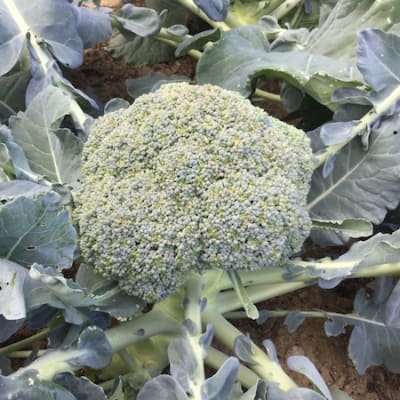
Brassica oleracea (botrytis group) (95 days) Open pollinated. Handsome uniform dark-green 5-6" heads. Abundant side shoots over a long harvest window. Ideal home-garden variety for the fall.
read more
Brassica oleracea (gemmifera group) (105 days) F-1 hybrid. Tall-stalked Divino’s plentiful very tight half-dollar-sized sprouts are dark green. Open branch architecture makes for low presence of aphids.
read more