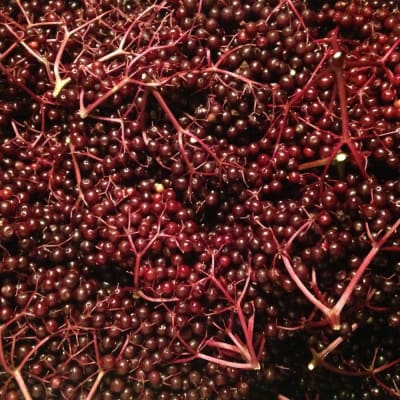
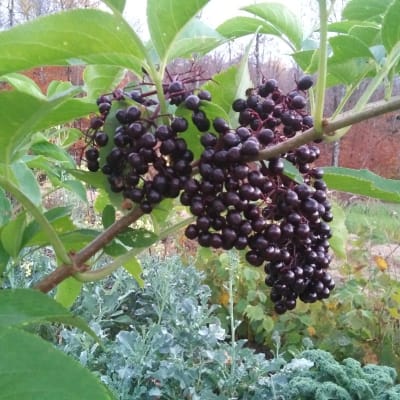
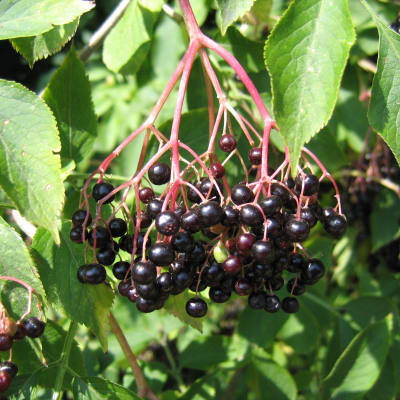
Sambucus canadensis 6-8' x same. Large clusters of large dark berries. High Brix level; great for winemaking. Upright, slightly spreading habit. Z4.
read more
Sambucus nigra 5-8' x 2-5'. Selected for juice production based on very high anthocyanin content and sweet flavor. Strong upright shoots. Z4/5.
read more
Hordeum vulgare Annual spring grain. Variety: ‘Quest.’ Suitable for cover-cropping, grain production, home brewing, or forage. Reliable, valuable feed grain for livestock.
read more
Hordeum vulgare Annual spring grain. Truly hulless variety, which makes for quick, easy, low-tech processing. Fast-growing, and competes well with weeds. Tolerates drought and heavy soils.
read more
Fagopyrum esculentum Annual broadleaf. Excellent cover crop for outcompeting summer weeds. Makes tasty flour for pancakes or baked goods. Bees like its abundant nectar.
read more
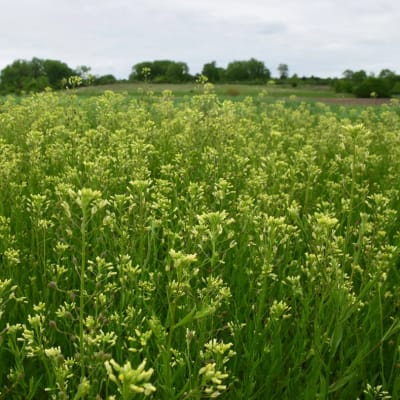
Camelina sativa Annual brassica. Widely adaptable and versatile winter-hardy cover crop and oilseed plant; tolerates poor conditions. Excellent nutrient scavenger. Sow when you would for winter rye.
read more
Pisum sativum var. arvense Annual legume. Also called Forage Peas. Great as weed-smothering workhorse soil builder, or a tasty and highly digestible forage. Likes cool moist conditions. Will grow in most soil types.
read more
Triticosecale var. ‘FORAGE FX 1001’ Triticale is a hybrid of wheat and rye, and boasts many advantages over plain winter rye. This variety was selected for winter hardiness and consistently high yields of both forage and seed yields.
read more
All-purpose lawn blend for the Northeast. Good for a range of conditions, full sun to partial shade. Makes a great understory for orchards and other perennial woody crops.
read more
Superb cover crop mix for fall planting where mechanical tillage is available the following spring. 78% winter rye and 22% hairy vetch. Adds nitrogen to the soil and suppresses weed growth.
read more
This dynamic cover crop duo has become a favorite of growers who value its vigorous growth and soil-building prowess, along with the assurance that it will winterkill up North.
read more
A superior soil-building cover crop mix. The oats come up first and are pulled down by the peas, which are then pulled down by the smothering vetch. Weeds don’t stand a chance in that jungle!
read more
Avena sativa Annual grass. A solid all-purpose oat. Generates biomass and smothers weeds. Tolerates bad weather and soil conditions. Excellent feed for cows and horses.
read more
Avena sativa Annual grass. Vigorous, lush foliage. Significantly more biomass production than common oats, making them superior for cover-cropping/soil-building, and for feeding livestock. Organic seed.
read more
Crotolaria juncea Annual legume. Rock star cover crop builds organic matter, fixes atmospheric nitrogen, controls harmful nematodes, and still finds time to be beautiful! Grows vigorously in warm conditions.
read more
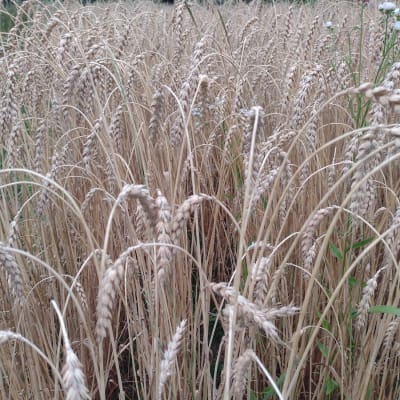
Triticum aestivum Winter annual grain. Extremely cold hardy hard red wheat. Flour has great flavor and texture, and sturdy plants make great straw. Good for small spaces. Well adapted to New England. Will Bonsall fave!
read more
Triticum aestivum Winter annual grain. Makes tender pastries, quick breads and pancakes. Also good for brewing wheat beers, or as a livestock feed.
read more
Secale cereale Winter annual grass. Extremely frost hardy, adaptable and competitive. For cover crop or grain. Deep extensive roots help prevent compaction and improve soil tilth. Vigorous spring regrowth.
read more
Foeniculum vulgare (90 days) F-1 hybrid. A sweet and mild bulb fennel that resists bolting. The delicate flavor will win over even fennel skeptics.
read more
Foeniculum vulgare (72 days) Open pollinated. Nearly as bolt proof as those pricey hybrids seven times the cost and 5-7 days longer-standing than Zefa Fino, with much thicker bulbs.
read more
Gaillardia pulchella Open pollinated. Daisy-type flowers in reds, yellow, rust and orange with a prominent colored center. Free flowering, low maintenance and easy to grow. Attracts butterflies. Good cutflower.
read more
Amaranthus hybridus (65 days to flower, 125 days to seed) Open pollinated. Is it a green vegetable? An ornamental? A gluten-free grain? Why, yes! No wonder Amaranth was sacred in pre-Columbian Mexico.
read more
Hordeum vulgare Open pollinated. An historic 6-rowed barley selected by Luther Burbank from California hulless barley. In his final seed catalog he called it “one of [his] greatest grain creations.”
read more
Sorghum bicolor (105 days) Open pollinated. Sprays of ornamental seedheads in gold, bronze, brown, black, burgundy, red and cream are great for making natural straw brooms and classic autumnal displays. Small shiny seeds are beloved by birds.
read more
Avena nuda (100 days) Open pollinated. Grain that’s easier to thresh than most other oats, though it still has a small hull that must be removed. A good variety to re-introduce growing grain on home ground.
read more
Oryza sativa (115 days) Open pollinated. Upland short-grain hardy Russian variety adapted to dry-land production. Can withstand a light frost. May be direct seeded in warmer regions.
read more
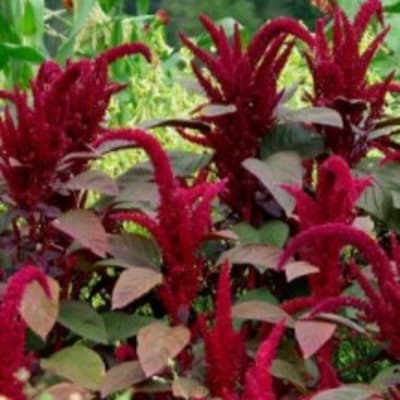
Amaranthus tricolor (120 days) Open pollinated. Very red Jamaican traditional green for Callaloo stew. Beautiful tricolor blaze makes it ornamental as well.
read more
Vitis spp. Mid. Large bright firm seedless deep red grapes with a fruity flavor. Makes the best raisins. Excellent fresh eating. Vigorous vines. Z4/5.
read more