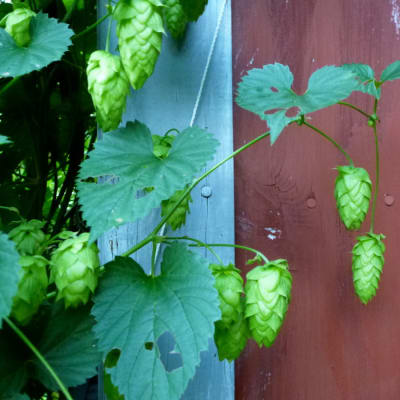
Humulus lupulus Late summer. Fragrantly aromatic hops, low bittering value. Very productive with large cones, ready to harvest mid-late August in central Maine. Z3.
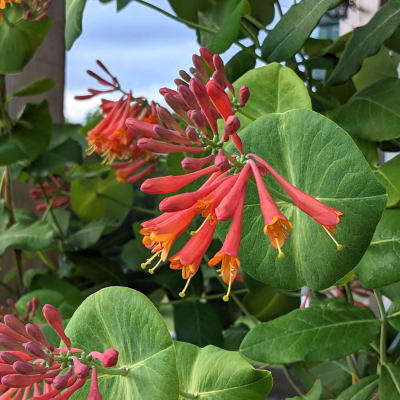
Lonicera × brownii 10-20'. Tall climbing honeysuckle. Non-invasive! Attractive to pollinators, especially hummingbirds. Species is native to North America. Z3.
Lonicera sempervirens 6–10' long. Scarlet-red and yellow flowers. Straight species. Selected for excellent blossom set and outstanding resistance to powdery mildew. Z3.
Humulus lupulus Excellent all-purpose hop. Low bittering. Spicy aroma. Good finishing hop for brewing English ales and stouts. Vigorous. Good disease resistance. Z3.
Dryopteris marginalis 20-30" tall. Strong stems and slightly glossy leathery grey-green fronds make this one of the best ferns for floral arrangements. Evergreen leaves in winter. Z3.
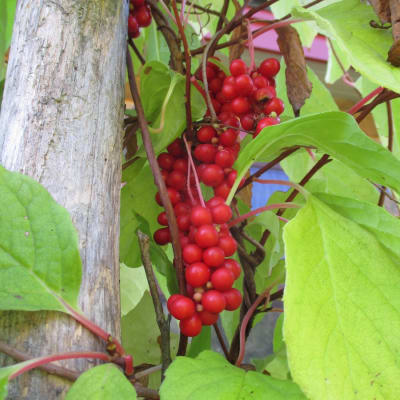
Schisandra chinensis 20' or taller. Ornamental vines produce flavorful medicinal berries. Adaptogenic fruit used to build the immune system and rejuvenate the body. Z4.
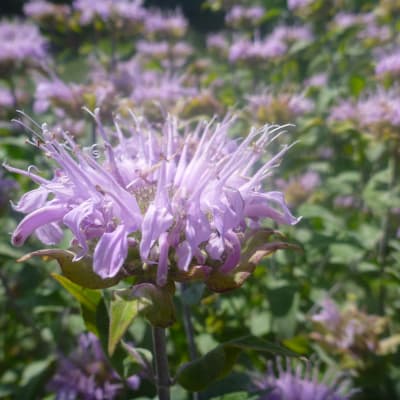
Monarda fistulosa 3-4' tall. Our native wildflower species with aromatic lavender blossoms. This is the variety most commonly used for medicinal purposes. Z3.
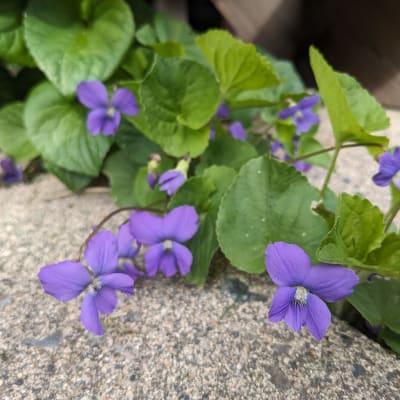
Viola sororia 6-10" tall. North American native with cheery blue-purple flowers and attractive heart-shaped leaves, all edible. Larval host plant for multiple species of butterflies. Z3.