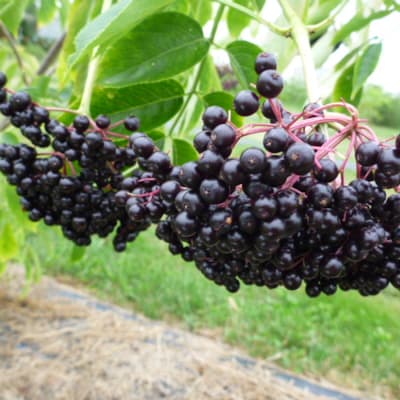
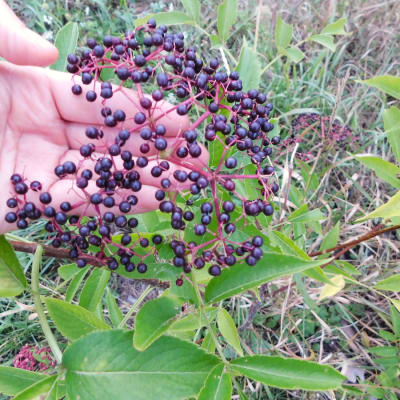
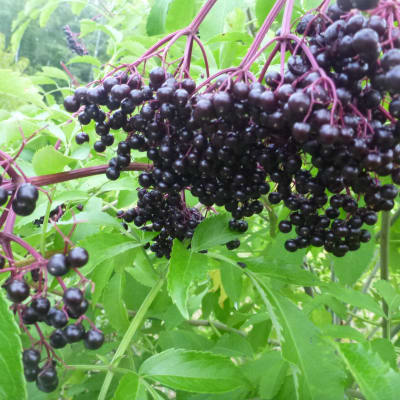
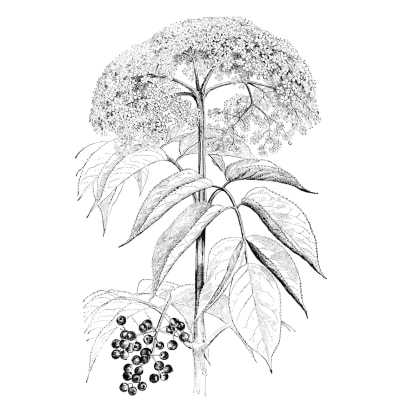
Sambucus canadensis 6-12' x same. Fedco intro. Sourced from a wide swath of plants growing in Aroostook County. Robust elderberry with consistently high fruit yields. Z3.
Sambucus canadensis 4-10' x same. An old reliable elderberry, considered by some to be the largest-fruited and heaviest-bearing cultivar. Rounded shrub. Z3.
Dryopteris marginalis 20-30" tall. Strong stems and slightly glossy leathery grey-green fronds make this one of the best ferns for floral arrangements. Evergreen leaves in winter. Z3.
Geranium sanguinium 4-9" tall. Magenta cups with purple-blue anthers cover tidy deep green lacy foliage. Compact form works well in containers. Considered more drought tolerant than others in the genus. Z3.
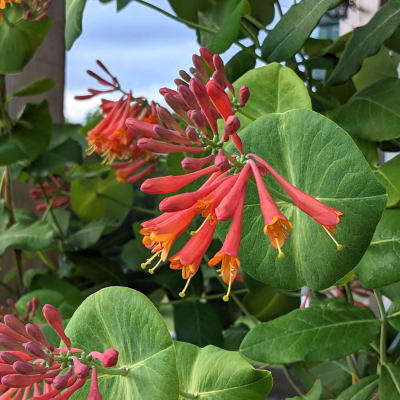
Lonicera × brownii 10-20'. Tall climbing honeysuckle. Non-invasive! Attractive to pollinators, especially hummingbirds. Species is native to North America. Z3.
Lonicera sempervirens 6–10' long. Scarlet-red and yellow flowers. Straight species. Selected for excellent blossom set and outstanding resistance to powdery mildew. Z3.
Iris versicolor 30-36" tall. Northeastern native species with gorgeous blue-violet flowers with bold purple veining and a white and lemon-yellow blaze. Early. Z2.
Eutrochium fistulosum 4-6' tall. Dusky-rose flowers are held on beautiful wine-red stems dusted with a light purplish bloom. Adaptable to wet soils. Z4.
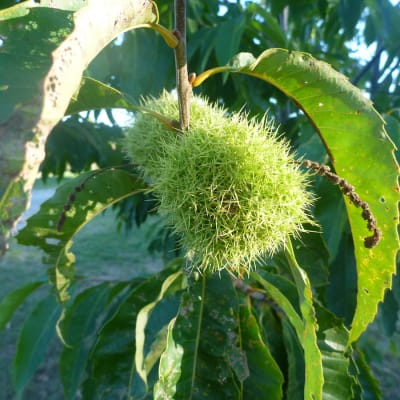
Castanea dentata Up to 100'. Once common in the eastern US. Important food source for people and wildlife. Not immune to blight but likely to thrive 10-30 years. Fast growing and precocious. Z4.
Castanea crenata Vigorous, precocious and high yielding. Can cross-pollinate with Chinese, American and hybrid chestnuts. Moderate to high blight resistance. Z4.
Castanea pumila 15-30' x 10-20'. Once an important food for indigenous peoples. Somewhat resistant to chestnut blight. Native to much of central/eastern U.S. Z4.
Corylus americana 12-18' x 10-15'. Multi-stemmed native shrub with sweet nuts. Showy catkins in spring. Patchwork of colors in autumn. Can bear in 3-5 years. Z4.
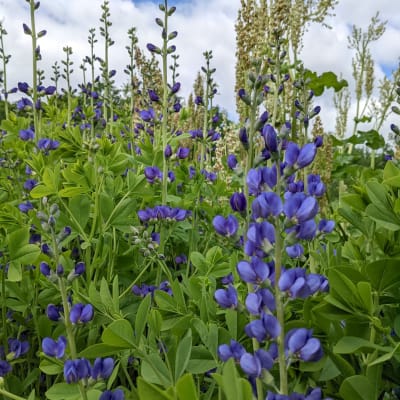
Baptisia australis 3-4' x same. Vibrant blue lupine-like flowers in early summer. Bushy habit and shrub-like structure once mature. Good for erosion control. Z3.
Amsonia tabernaemontana var. salicifolia 24–36" tall. Fine grassy willow-like foliage. Clusters of powder-blue florets in early summer. Best planted en masse. Z3.
Eryngium yuccifolium 3-6' tall. Globe-thistle-like 1" greenish-white flowerheads. Subtle honey-like scent. North american native. Great for cutflower production. Z3.
Actaea racemosa 5-7' tall. Long arching racemes of creamy white serpentine flower spikes. Flowers mid to late summer. Medicinal. Woodland native and pollinator powerhouse. Z3.
Pycnanthemum virginianum 24-36" tall. Makes a tasty minty tea traditionally used to settle indigestion. Spreads readily. Densely flowered, attractive to pollinators. Native. Z4.
Acorus americanus 24-36" tall. Water-loving bog plant with broad sword-like foliage that smells sweetly of citrus and vanilla when crushed. Roots traditionally used as an aromatic bitter for digestive upsets. Z3.
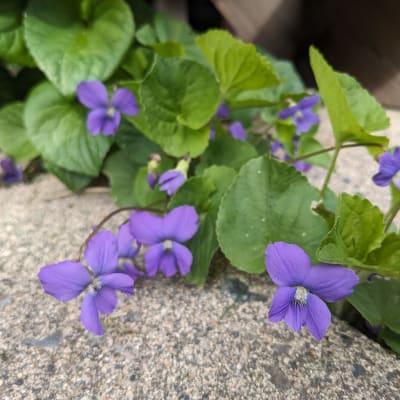
Viola sororia 6-10" tall. North American native with cheery blue-purple flowers and attractive heart-shaped leaves, all edible. Larval host plant for multiple species of butterflies. Z3.
Vaccinium macrocarpon White skin. Albino berries with red blush. Selected from a seedling found growing in a bog on an island off the coast of Maine. Lasts up to 6 months in cold storage. Z2.
Vaccinium macrocarpon Red skin. 4-10". The cranberry of holiday sauces, bread and jelly. Dense low lustrous evergreen groundcover loaded with large red berries in fall. Z2.
Gaylussacia baccata 1-3' x 2-4'. Cousin of the blueberry. Less acidic, more mildly sweet flavor. Flowers in June, fruits in August. Full sun to part shade but fruits best in sun. Native to eastern U.S. and Canada. Z3/4.
Calycanthus floridus 6-10' x 6-12'. Beautiful native shrub with dark burgundy-maroon flowers and shiny leaves. Blooms early, flowers through summer. Highly fragrant. Z4/5.
Myrica pensylvanica Waxy blue skin. 5-10' x same. A common sight along Maine’s rocky shores. Fragrant glossy deep green leaves and small waxy berries. Fixes nitrogen and feeds wildlife. Z2.
Prunus maritima 6' × 5-6'. Rounded dense suckering shrub found along ocean beaches. Showy white blooms in spring. Edible plums in late summer. Plant two for fruit. Z3.