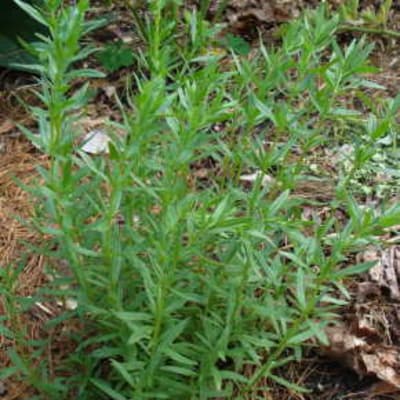
Pimpinella anisum (130 days) Open pollinated. White umbel flowers in July have delicate ornamental value. Seed ripens in August and September—wait until the tips of the fruits turn grey, and collect seeds before they turn black.
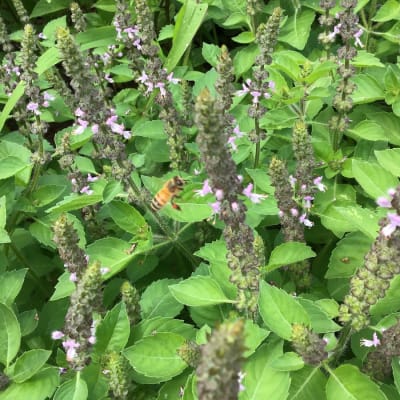
Agastache foeniculum Open pollinated. Perennial can grow 3' tall, 2' wide. Vigorous self-sower. Anise-scented foliage and purple flowers delightful as a tea or culinary seasoning, or filler in mixed bouquets.
Agastache foeniculum Open pollinated. Perennial can grow 3' tall, 2' wide. Vigorous self-sower. Anise-scented foliage and purple flowers are delightful as a tea or culinary seasoning, or filler in mixed bouquets.
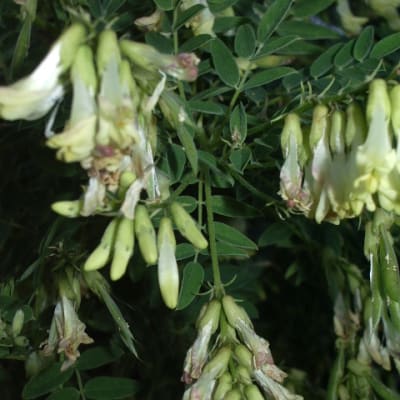
Withania somnifera Open pollinated. Upright shrub 2' with green-to-yellow flowers ripening to red berries. Roots are dried at the end of the growing season and used internally powdered or tinctured.
Verbena hastata Open pollinated. Perennial. 5-6' plant grows naturally in moist thickets and meadows does well in similar garden conditions, sending up many terminal spikes of bristly blue-violet flower clusters the entire season.
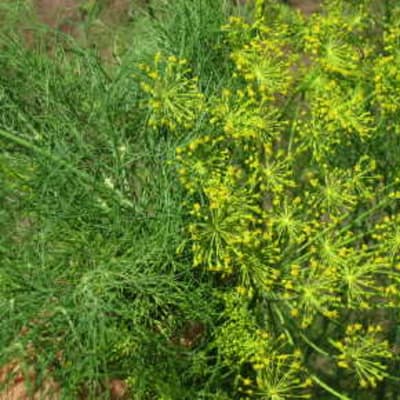
Foeniculum vulgare (65 days) Open pollinated. Slow grower with very thin stems valued for its striking feathery bronze foliage. Delicious and decorative.
Codonopsis pilosula Open pollinated. Perennial to Zone 4. Used in Chinese medicine like ginseng, but considerably easier to grow than true Panax ginseng.
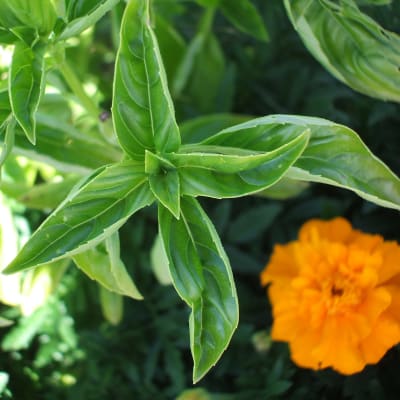
Ocimum basilicum (70 days) Open pollinated. Impressive yields from shapely plants well suited to pots or the field. Classic sweet Genovese flavor and a marvelously potent aroma. Resists powdery mildew.
Petroselinum crispum (75 days) Open pollinated. Double-curled type with long upright stiff stems. Holds color all season, tolerates heat and repeated cuttings.
Dysphania ambrosioides (55 days) Open pollinated. Culinary herb native to Central America, often added to beans to deepen flavor and to mitigate flatulence. Sharp and pungent.
Trigonella foenum-graecum (30 days leaf, 120 days seed) Open pollinated. Leaf and seeds are used culinarily, imparting a sweet nutty flavor reminiscent of maple syrup.
Ocimum basilicum (60 days) Open pollinated. Purple stems and flowers of standard Thai, but displayed upon a strong bushy umbrella form with wide and beautifully ample flowers.
Ocimum basilicum (70 days) Open pollinated. The choice of many connoisseurs for making pesto. Leaves are slightly smaller and finer than Sweet Basil with more aroma and potency.
Ocimum basilicum (70 days) Open pollinated. The choice of many connoisseurs for making pesto. Leaves are slightly smaller and finer than Sweet Basil with more aroma and potency.
Petroselinum crispum (70 days) Open pollinated. Italian heirloom. Flat-leaved parsley with good early seedling vigor and rich sweet flavor. Grows to 1' tall.
Petroselinum crispum (70 days) Open pollinated. Italian heirloom. Flat-leaved parsley with good early seedling vigor and rich sweet flavor. Grows to 1' tall.
Origanum heracleoticum Open pollinated. Perennial to Zone 4, but survives some winters in Zone 3. The true culinary herb for Greek and Italian cooking. Low-growing with fragrant dull green and purple leaves and white flowers.
Hyssopus officinalis Open pollinated. Perennial. Normally hardy to Zone 3. Beautiful aromatic perennial border plant that produces spikes of indigo flowers.
Ocimum africanum (100 days) Open pollinated. A superior strain of Tulsi or Sacred basil, with a more compact growth habit and more pungent sweet flavor.
Alchemilla mollis Open pollinated. Perennial. 12-18" Bears large loose sprays of tiny greenish-yellow flowers from early summer onward. Makes a good border and ground cover in shady locations.
About medicinal herbs: Archeological evidence dates the medicinal use of herbs back 60,000 years to the Neanderthals. 85% of the world’s population employ herbs as medicines, and 40% of pharmaceuticals in the U.S. contain plant-derived materials. Fewer than 10% of higher plant species have been investigated for their medicinal components. Interest in traditional herbal remedies continues to grow.
Statements about medicinal use of plants have not been evaluated by the FDA, and should not be used for the diagnosis, treatment, cure or prevention of any ailment. Before using or ingesting any medicinal plant, consult a healthcare practitioner familiar with botanical medicine.
Takinagawa Burdock and Resina Calendula, as well as oats, mammoth red clover and alfalfa in the Farm Seed section, also have medicinal uses. Medicinal herbs such as black cohosh, licorice, and many more are available as plants, and shipped in the spring with orders from our perennial plants warehouse.
Culture: Some herbs are customarily grown from divisions because they cannot come true from seed, such as scented thymes and flavored mints. Some require fall sowing of fresh seed, such as sweet cicely and angelica.
Using herbs: Drying herbs at home is not difficult. Whole leaves retain their flavor at least a year. To substitute fresh herbs for dried in cooking, use triple the dried quantity called for in a recipe.