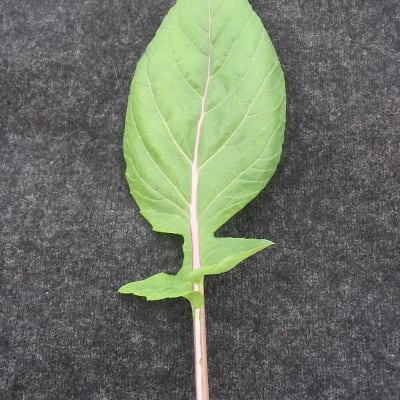
Brassica rapa (37 days) Open pollinated. Produces many pencil-thick deep purple flowering shoots with pleasing mild mustard flavor. Grows best in cool weather.
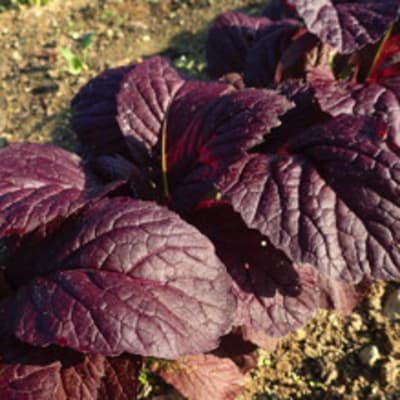
Brassica juncea (20 days baby; 45 days mature) Open pollinated. A favorite for cutting at the purple baby stage. Vibrant maroon slightly toothed leaves on lime-green stems. Good for salads or braising.
Symphyotrichum novae-angliae 4-6' tall. North American native. Blooms range from blue-purple to lavender-pink with yellow eyes. Attractive to pollinators. Z3.
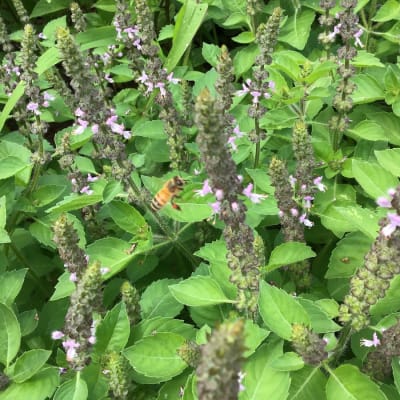
Ocimum africanum (100 days) Open pollinated. A superior strain of Tulsi or Sacred basil, with a more compact growth habit and more pungent sweet flavor.
Monarda punctata Open pollinated. A whimsical beauty with complex blossoms and many culinary and medicinal uses. Its oregano-like aroma and flavor is lovely for tea and seasoning.
Dicentra formosa 14-20" tall. Heart-shaped blossoms in late spring. With good moisture, the lacy foliage look nice all season. Full to dappled shade. Z3.
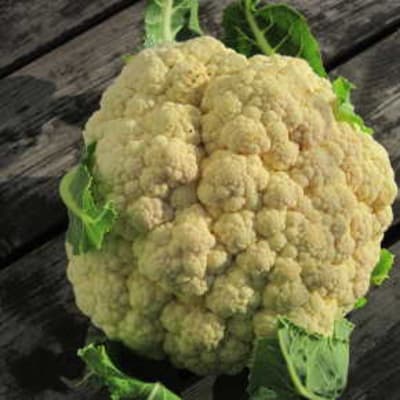
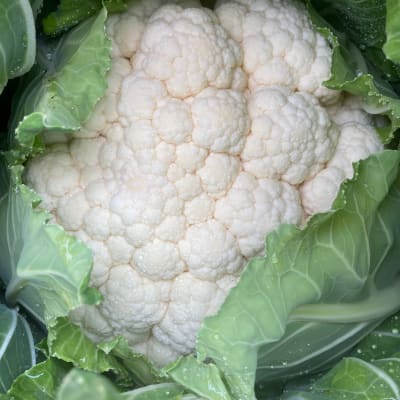
Brassica oleracea (botrytis group) (60 days) F-1 hybrid. Short stems bear compact 1-2 lb uniform firm white tight heads with fine beads. Early, but less dense than later varieties.
Brassica oleracea (botrytis group) (68 days) F-1 hybrid. Pastel orange uniform heads of dense curds on sturdy plants. Highly adaptable; consistently performs well in a range of conditions, including heat stress.
Brassica oleracea (botrytis group) (93 days) F-1 hybrid. Very large upright plants set dense 2-4 lb attractive white domed heads. Tender with very good flavor.
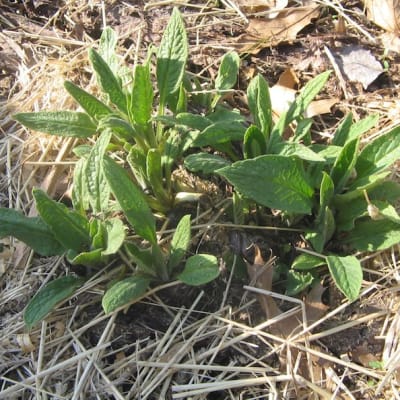
Symphytum × uplandicum 24–48" tall. Great companion plant for orchards. Excellent addition to the compost pile. Rich in silica, nitrogen, magnesium, calcium, potassium and iron. Z3.
A netted grid of 6.5" squares can be used vertically or horizontally. Unlike our poly trellis netting, jute netting does not stretch. Withstands up to three seasons of use.
A netted grid of squares can be used vertically or horizontally. Unlike our poly trellis netting, jute netting does not stretch. Withstands up to three seasons of use.
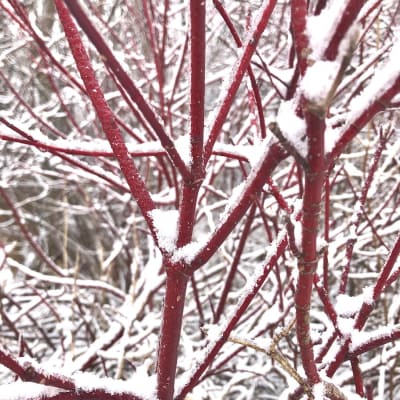
Cornus sericea 8-10'. Multi-stemmed spreading shrub excellent for hedges and borders. Red stems admirable in the winter. Valuable native wildlife plant. Z2.
Cornus amomum 8-12' x same. Large rounded long-limbed shrub. Effective for erosion control, wildlife or pollinator habitat. Maroon bark visible in winter. Suckers and spreads. Native to eastern U.S. Z4.
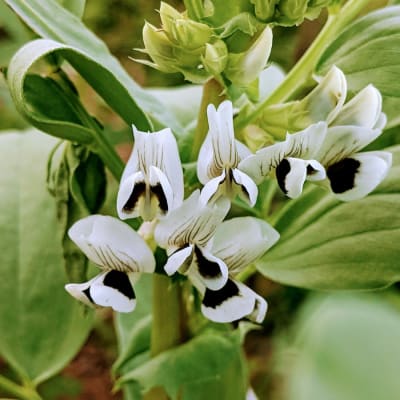
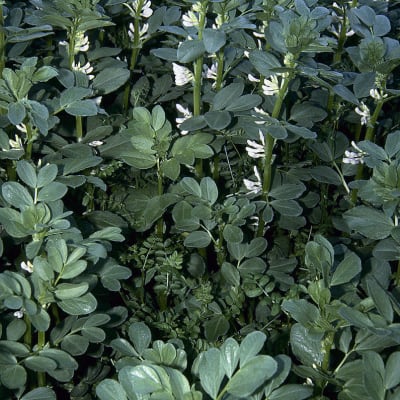
Vicia faba Annual or winter annual legume. Great for fixing nitrogen, and building large amounts of biomass. Bell beans will happily sprout in half-frozen soil, and tolerate a wide range of soil conditions.
Crotolaria juncea Annual legume. Rock star cover crop builds organic matter, fixes atmospheric nitrogen, controls harmful nematodes, and still finds time to be beautiful! Grows vigorously in warm conditions.
Open pollinated. Two packets: one mixed lettuces, one mixed greens. Plant lettuces first, then greens for fabulous salad mixes. Cut then water, and they grow again.
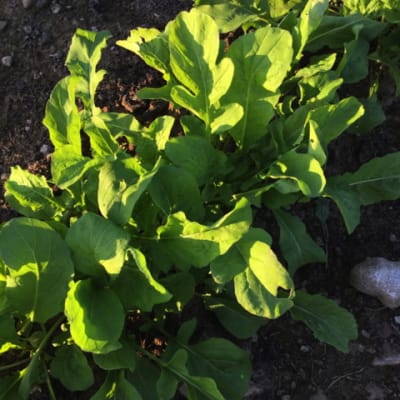
Eruca sativa (47 days) Open pollinated. Musky, cold tolerant greens, great for early spring, late fall, over-wintering. Eat the flowers if you miss some of the greens.
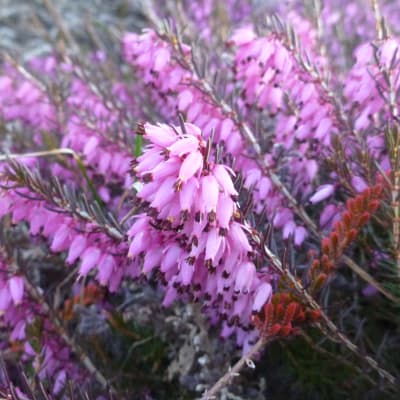
Erica carnea 6-8" x 18" Profuse blooms very early spring through April with repeat blooms in August. Mounded mat-like creeping growth habit. Low maintenance! Z4.
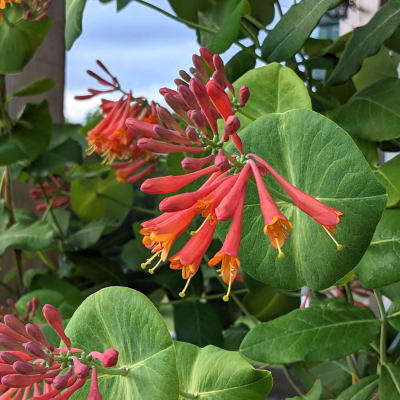
Lonicera × brownii 10-20'. Tall climbing honeysuckle. Non-invasive! Attractive to pollinators, especially hummingbirds. Species is native to North America. Z3.
Syringa vulgaris 10' x same. Very fragrant large single reddish-purple blooms, with each petal edged in pure white. Unique and beautiful! Upright rounded open form. Z3.