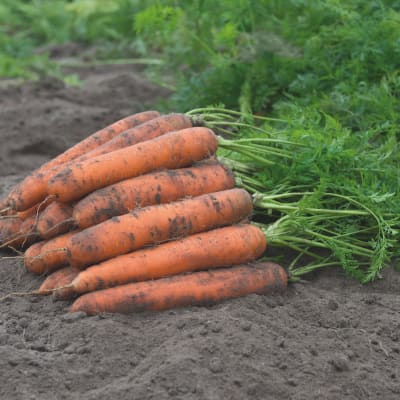
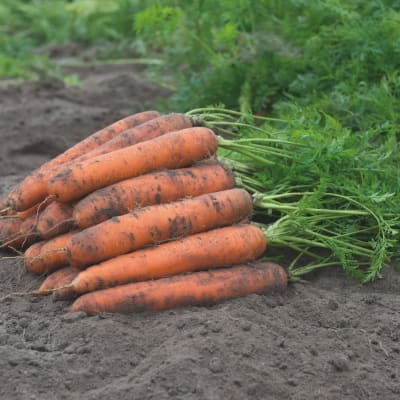
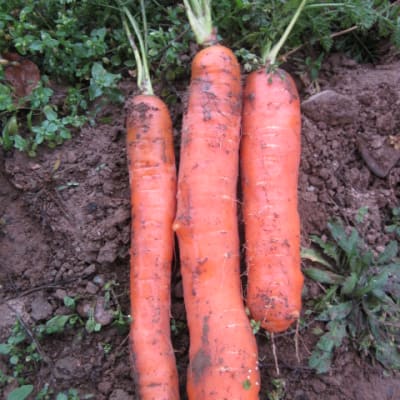
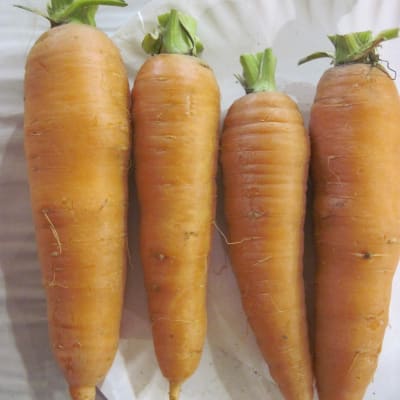
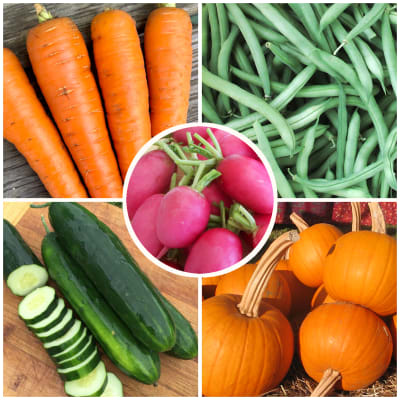
Daucus carota (55 days) F-1 hybrid. Blunt Nantes-type 7-8" orange carrot with strong green tops and a medium core. Snappy, sweet and juicy. Use fresh or store.
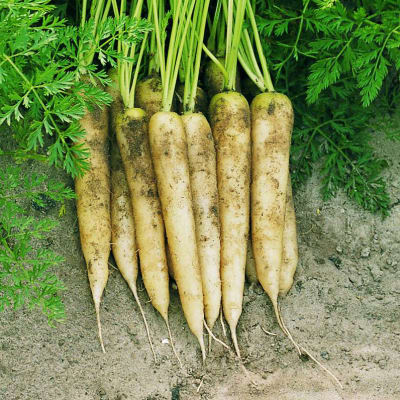
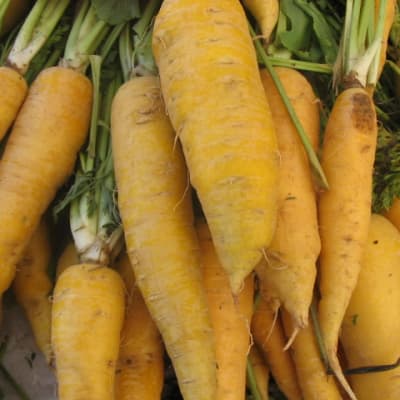
Daucus carota (70 days) F-1 hybrid. Straight 8" creamy-white carrot. Good texture and flavor, both raw and cooked. Develops green shoulders at full-size.
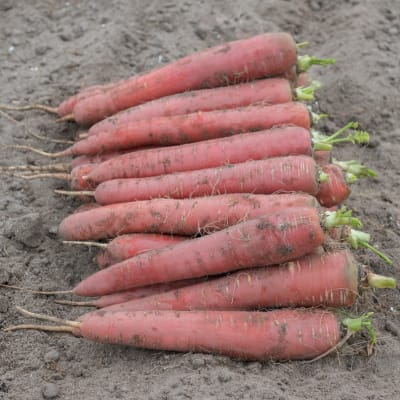
Daucus carota (55 days) Open pollinated. Early coreless translucent pinkish-orange blunt-tip roots. Mild sweetness boosted by “carrot perfume.” Upright tops good for bunching.
Daucus carota (55 days) Open pollinated. Early coreless translucent pinkish-orange blunt-tip roots. Mild sweetness boosted by “carrot perfume.” Upright tops good for bunching.
Daucus carota (55 days) Open pollinated. Parisian heirloom. Round 1½" deep orange carrot. Harvest young and tender; enjoy cooked for sweetness and creamy texture. Easy in clay soil.
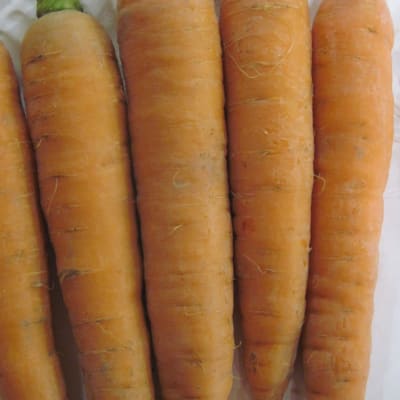
Daucus carota (68 days) Open pollinated. Uniform cylindrical 7" roots with unusually good interior color, crisp texture and fine flavor. Holds well; an excellent keeper too.
Daucus carota (70 days) Open pollinated. French heirloom. Thick 5-7" long red-orange carrot. Performs well in heavy soil. Excellent flavor and long storage.
Daucus carota (85 days) Open pollinated. A stalwart storage carrot whose flavor improves with time. Also good for fresh eating and juicing. 7–9" heavy cylindrical roots.
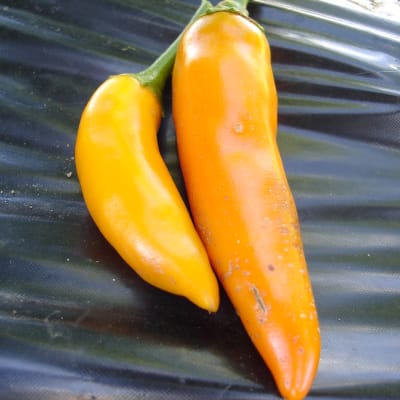
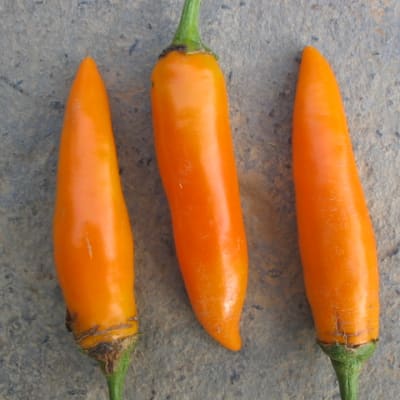
Capsicum annuum Fluorescent orange skin. (68 days) Open pollinated. Thin-walled 1½–3½" tapered fruits are as hot as they look and make welcome additions to chutneys, marinades, salsas, and hot sauces. Also delicious dried and ground.
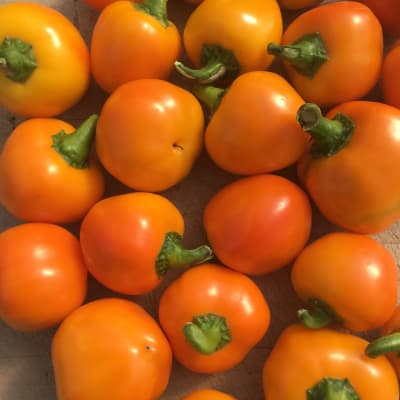
Capsicum annuum Tangerine skin. (74 days) Open pollinated. Round 1-2" shiny bright tangerine fruits on sturdy plants. Heat is comparable to a mild jalapeño, but varies with the weather
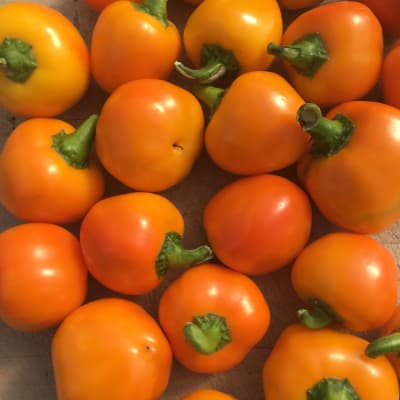
Capsicum annuum Tangerine skin. (74 days) Open pollinated. Round 1-2" shiny bright tangerine fruits on sturdy plants. Heat is comparable to a mild jalapeño, but varies with the weather.
If thoughts of crisp carrots in March set your mouth watering, you'll love this well-illustrated tour of root cellar designs, featuring varietal selections, best storage conditions, and recipes.
Soluble borate for fluid fertilizers and nutrient sprays. Boron is essential for all stages of tree growth and fruit set. Powder mixes easily in any spray solution.
Laser-cut birchwood markers. Each tag is engraved with a crop’s name and a charming line drawing to represent it. Set of 20 stakes covers the most common annual garden crops. Made in WA.
Arctium lappa (120 days) Open pollinated. Standard Japanese variety. Thin 1-2' long mild earthy root for stir-fries, soups and herbal medicine. Can be dug in spring with parsnips.
Don’t guess—test! You’ll learn your soil pH, organic matter percentage, levels of common minerals and nutrients, plus we’ll offer customized recommendations to correct any deficiencies or imbalances.
Brassica oleracea (gongylodes group) Green skin, white flesh. (130 days) Open pollinated. Czechoslovakian heirloom. Green kohlrabi can exceed 10" and 10 lb without getting woody. Crisp white interior is mildly tangy.
Everything a child or budding grower needs to get started: potting soil, fertilizer, seedling containers and plant labels, as well as growing instructions and seeds for 8 easy crops.
Beta vulgaris (55 days) Open pollinated. Round rose-gold beet. Zoned white-yellow raw interior cooks to light orange. Short light green tops with gold stems and veins.