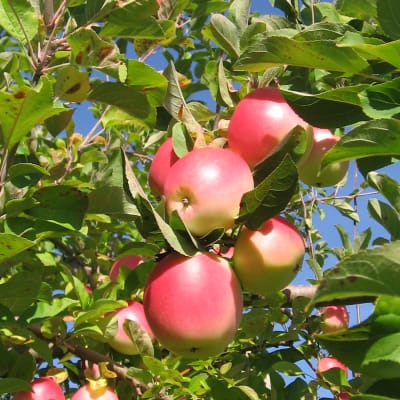
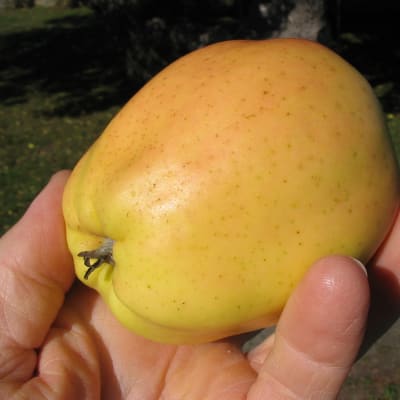
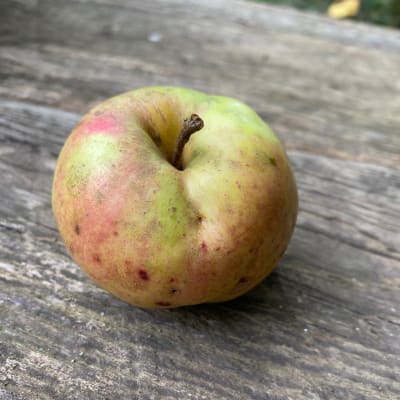
Malus spp. Fall, russeted red skin, yellow-orange flesh. Rich juicy spicy medium-sized fruit. Great fresh, in salads and for cider. Moderately vigorous tree. Z4.
Malus spp.This is a twig for grafting. Fall, greenish yellow skin, deep salmon flesh. Beautiful deep pink flesh. Medium-sized fruit good for fresh eating and simply admiring! Z4.
Malus spp.This is a twig for grafting. Late fall, golden skin. European heirloom. Crisp fine-grained flesh with bold citrusy pineapple flavor. Good for dessert, cooking and pressing. Stores well. Z4.
Malus spp. Winter, red-blushed skin, cream flesh. European heirloom. Popular for its unusual shape and prized for its flavor and storage ability. Blooms midseason. Z4.
Malus spp.This is a twig for grafting. Winter, russeted golden-orange skin, yellowish flesh. Medium-small fresh-eating apple of unparalleled quality. Intense, aromatic, sharp & sweet. Good keeper. Scab-resistant. Z4.
Malus spp. Winter, red skin, yellowish flesh. Large crisp juicy fruit. Excellent for fresh eating, cooking and hard cider. Keeps till spring. Vigorous productive long-lived tree. Z4.
Malus spp.This is a twig for grafting. Winter, red skin, yellowish flesh. Large crisp juicy fruit. Excellent for fresh eating, cooking, and hard cider. Keeps till spring. Biennial bearer. Z4.
Malus spp. Winter, russeted green skin, yellowish flesh. Famous European cooking apple. Cooks and bakes beautifully. Tart right off the tree, but mellows in storage. Keeps well. Z4.
Malus spp.This is a twig for grafting. Winter, russeted green skin, yellowish flesh. Famous European cooking apple. Big blocky fruit patched with green and russet. Cooks and bakes beautifully. Keeps well. Z4.
Malus spp.This is a twig for grafting. Winter, red skin. Classic all-purpose Vermont heirloom. Large dark red striped fruit. Mild subacid flavor, moderately juicy and crisp. Z3.
Malus spp. Fall-winter, purplish red skin. Aromatic dry fruit historically used for mincemeat. Recommended for drying. Shaped like a sheep’s nose! Good keeper. Z4.
Malus spp.This is a twig for grafting. Fall-winter, purplish red skin. Aromatic dry fruit historically used for mincemeat. Recommended for drying. Shaped like a sheep’s nose! Good keeper. Z4.
Malus spp. Winter, deep purple skin, greenish white flesh. Uniquely dark fruit with well-balanced flavor. Excellent pies and cider. Maine heirloom. Best eating late Dec. to March. Great keeper. Z4.
Malus spp.This is a twig for grafting. Winter, deep purple skin. Uniquely dark fruit with well-balanced flavor. Excellent pies and cider. Maine heirloom. Best eating late Dec. to March. Great keeper. Z4.
Malus spp. Fall, deep red skin, yellowish flesh. A popular historic variety from the South. Great for fresh eating, cider and cooking. Reaches peak flavor in storage. Natural resistance to many pests and diseases. Z4.
Malus spp.This is a twig for grafting. Fall, red-blushed skin. Large, crisp and juicy apple for dessert or culinary use. Keeps until about mid-December. Blooms midseason. Z4.
Malus spp. Fall-winter, russeted purplish red skin. Medium to very large apple has a good balance of sweet and tart with hints of pear. All-purpose. Keeps until midwinter. Z4.
Malus spp.This is a twig for grafting. Fall-winter, russeted purplish red skin. Medium to very large apple has a good balance of sweet and tart with hints of pear. All-purpose. Keeps until midwinter. Z4.
Malus spp.This is a twig for grafting. Fall. Very high-quality tender dry dessert fruit with rich spicy aromatic flavor. Keeps until December. Blooms midseason. Z3.
Malus spp.This is a twig for grafting. Fall-winter. Very large fruit with fine-grained aromatic flesh. Sweet and crisp. Excellent for sauce. Good keeper. Vigorous tree. Blooms midseason. Z4.
Malus spp.This is a twig for grafting. Fall-winter, russeted gold skin. Small to medium-sized high-flavored russet apple. Excellent dessert quality. Tender, rich, crisp, flavorful. Also makes good cider. Stores till January. Z4.
Malus spp.This is a twig for grafting. Late summer-early fall, purplish red skin. Summer-Fall. Very hardy high-quality cooking apple. Large and glossy purplish-red roundish fruit. Firm juicy flesh. Good for fresh cider. Stores 2 months. Z3.
Malus spp. Winter, pale green-yellow skin, white flesh. Large fruit with fine-grained juicy flesh. Famous dessert and cooking apple. All-purpose. Keeps till midwinter. Z4.
Malus spp.This is a twig for grafting. Winter, pale green-yellow skin, white flesh. Large fruit with fine-grained juicy flesh. Famous dessert and cooking apple. All-purpose. Keeps till midwinter. Z4.
Malus spp. Fall, orange-red skin. Juicy, distinctly tart, full-flavored fresh eating apple. Very popular at our Common Ground Country Fair taste tests! Keeps about a month. Z4.
Malus spp.This is a twig for grafting. Fall, orange-red skin. Juicy, distinctly tart, full-flavored fresh eating apple. Very popular at our Common Ground Country Fair taste tests! Keeps about a month. Z4.
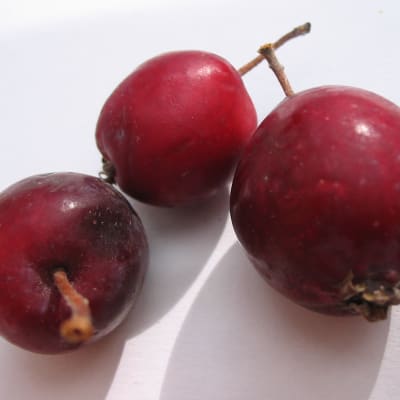
Malus spp. Late summer, purple-blushed red skin. Fresh-eating crab about the size of a small plum. Tender, crisp, juicy and tart. Good in sauce. Highly scab resistant. Z2.
Malus spp.This is a twig for grafting. Late summer, purple-blushed red skin. Small fresh-eating crab about the size of a small plum. Tender, crisp, juicy and tart. Not sweet. Good in sauce. Highly scab resistant. Z2.
Malus spp.This is a twig for grafting. Late summer, pinky-red-striped skin. Distinctive strawberry shape! Tender, aromatic flesh. Great for cooking and eating fresh. Blooms midseason. Z4.
Malus spp. Fall-winter, pinky-red washed skin, pale yellow flesh. All-purpose. Relatively tart, great for pies, sauce and pizza! Very nice fresh too. Good keeper. Z4.
Malus spp.This is a twig for grafting. Early fall, russeted bronze-red skin, yellowish flesh. Firm, crisp, juicy dessert crab excellent for fresh eating, pickles and sauce. Stores a month. Beautiful mid-late blooms. Z3.
Malus spp. Fall, blushed yellow skin. Highly flavored dessert apple popular in the Victorian era for its complex spicy honey-nut flavor. Compact rugged tree. Z4.
Malus spp.This is a twig for grafting. Fall-winter, purple-blushed red skin, white flesh. Medium-large size, fine-grained, crisp, tender, juicy. All-purpose. Annual producer of heavy crops. Bears young. Z4.
Malus spp. Late summer, red-striped skin, yellowish flesh. Known in New England as one of the very best pie apples! From Russia, well before 1800. Extremely hardy. Scab resistant. Z3.
Malus spp.This is a twig for grafting. Late summer, red-striped skin, yellowish flesh. From Russia, well before 1800. Known in New England as one of the very best pie apples! Extremely hardy. Scab resistant. Z3.
Malus spp.This is a twig for grafting. Fall-winter, dark red skin, cream flesh. Medium-sized rdark red fruit with cream-colored flesh. Firm, aromatic, excellent fresh eating. Stores up to 5 months. Z4.