Scatterseed Project
Please Support Scatterseed
We have long donated funds from our Education Subsidy program to Will Bonsall’s Scatterseed Project and recently became the largest supporter of his vital preservation work. Scatterseed maintains a collection of more than 700 varieties of potatoes. Each one of those varieties must be grown out each year. Consider making a donation to Scatterseed (send a check to us or directly to Scatterseed) to help keep Will’s potatoes alive.

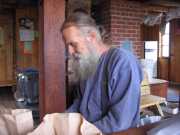
Will Bonsall moved to Industry, Maine, in 1971 to live simply and self-sufficiently. He runs Khadighar Farm with his partner Molly Thorkildsen. Will’s Scatterseed Project hosts and preserves thousands of genetically diverse crops well-suited to Maine’s seasons and soils. The project focuses on a few vegetable families and makes a valiant effort to keep viable a healthy selection of genetics. One of Will’s main focuses is clonally propagated tubers with over 700 varieties of potatoes and the most extensive jerusalem artichoke collection in North America. Scatterseed is beyond heroic, maintaining 1200 pea varieties as well as other legumes: chickpeas, favas and runnerbeans.
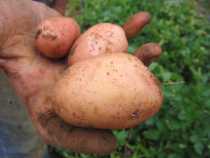
Because two-season, or biennial, crops are hard to overwinter or store in our Maine climate, there are few growers in New England saving seed for crops such as rutabagas, leeks or turnips. However, Will tends a magnificent collection of these as well, concentrating on those crops that excel in our challenging climate.
To round out his collection and to emphasize self-sufficiency, Will plans to add what he considers the easier crops to his seed-saving work, like beans, tomatoes and grains.
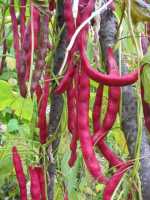
The vital work of seed-saving doesn’t leave much room or time for raising market crops. Will earns little revenue from his crusade. Scatterseed may be the only place on the planet where some of these varieties are still alive. Here a little more labor can mean huge success. Your donations make a very real impact—more than $2800 in 2021. Scatterseed relies on our support. Consider making a donation on the Potatoes, Onions and Exotics order form to keep the work going and to ensure that we can continue to enjoy our world of vegetable wonders.
To learn about Will’s growing methods, check out his new book: Will Bonsall’s Essential Guide to Radical, Self-Reliant Gardening.